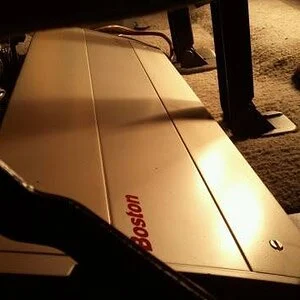
In the world of car audio, the pursuit of sonic fidelity often leads enthusiasts to discover that the most common bottlenecks are not the speakers themselves, but the power delivery systems driving them. Recent technical discourse has highlighted a critical disconnect between marketing specifications for head units and the real-world performance required to drive high-quality component speaker systems. Whether you are looking to revitalize your factory setup or embark on a full-scale audio overhaul, understanding the nuances of power, impedance, and crossover configuration is essential.
Main Facts: The Myth of Head Unit Power
The central challenge facing many car audio installers is the reliance on the internal amplifiers of aftermarket head units. While marketing materials often tout "100W x 4" output, these figures are frequently deceptive. Under rigorous testing—specifically the CTA-2006 compliance standard—the actual power output of a standard head unit typically hovers closer to 45W per channel at a 4-ohm load.
When compared to the standard 22W output of factory-installed head units, the jump to 45W is often insufficient to provide a meaningful increase in dynamic headroom or perceived volume. Furthermore, these head units are almost universally incapable of handling 2-ohm loads. Attempting to run 2-ohm component speakers directly off a head unit’s internal amplifier is a recipe for hardware failure; the lack of thermal headroom leads to clipping, distortion, and, inevitably, the permanent damage of the head unit’s internal circuitry.
Chronology: Assessing the Audio Upgrade Path
For those looking to upgrade, the process generally follows a logical progression of diagnostic evaluation and system design.
- Initial Assessment: Determining the current state of the audio chain. If your components are high-quality but sound thin or distorted, the issue is almost certainly a lack of "clean" power.
- The Decision Point (Passive vs. Active): Once a dedicated amplifier is introduced, the user must choose between a passive setup—where the signal is split by the speakers’ built-in crossovers—or an active setup, where the head unit handles frequency separation.
- Amplification Integration: Introducing a 4-channel amplifier to handle the component speakers while leaving the subwoofer duties to a secondary, dedicated power source or a 5-channel unit.
- Enclosure and Sub-Bass Integration: The final stage involves selecting a subwoofer solution based on physical space, fabrication capability, and desired sound pressure levels.
Supporting Data: The Case for Dedicated Amplification
High-quality component speakers, such as the ones frequently encountered in enthusiast builds, possess potential that is rarely unlocked by head-unit power alone. When properly "fed"—meaning supplied with the correct voltage and current—these speakers can produce a soundstage that is transformative.
Passive Configurations
In a passive setup, the speakers utilize the factory-installed capacitor/coil crossovers. This is the most straightforward installation path. By utilizing the head unit’s 5V pre-outs and routing them to a 4-channel amplifier (ideally in the 100W–150W RMS range), the user provides the components with the "breathing room" they need to perform at their peak. This configuration allows for the full L/R front and rear signal to be amplified, while keeping the remaining 2 RCA pre-outs dedicated to a subwoofer.
Active Configurations
The active route is more complex but offers greater control. By bypassing the physical passive crossovers and using the head unit’s internal digital signal processing (DSP) to handle frequency separation (e.g., 3.5kHz at a 24dB slope), the user can gain precise control over the soundstage. However, this requires additional wiring to each individual tweeter and woofer, which may prove daunting for a novice installer.
Official Technical Recommendations
Industry experts advise that the passive configuration remains the gold standard for those prioritizing a balanced soundstage with a manageable installation process. While the active configuration provides a marginal increase in fidelity, the complexity of running discrete wiring to four separate tweeters and four separate woofers often outweighs the audible gains for the average listener.
Furthermore, the integration of a subwoofer must be approached with a clear understanding of the vehicle’s specific needs. A "self-powered" (active) prefab subwoofer is the path of least resistance. However, for those seeking deeper, more accurate bass, a dedicated amplifier paired with a custom-built enclosure remains the superior, albeit more labor-intensive, solution.
Implications for Future Installations
The transition from a basic head-unit-powered system to an amplified component setup has significant implications for both hardware longevity and listener satisfaction.
Skill Level and Fabrication
Before purchasing equipment, users must conduct a "capability audit." Key questions include:
- Fabrication Skills: Are you prepared to construct a custom subwoofer enclosure, or are you limited to a pre-fabricated box?
- Electrical Aptitude: Are you comfortable running high-gauge power and ground cables, as well as signal-carrying RCA cables and speaker wire throughout the vehicle’s interior?
- Budgetary Constraints: The total cost of an audio build includes not only the amps and speakers but also sound deadening (dynamat), wiring kits, distribution blocks, and potential mounting hardware.
The 5-Channel Solution
For those looking to streamline their build, the 5-channel amplifier represents a high-value compromise. By housing the power for the front components, rear fill, and the subwoofer in a single chassis, the installer reduces the footprint of the installation and simplifies the wiring path. This is often the most efficient way to maximize space in compact vehicles without sacrificing power.
Conclusion: The Path Forward
Ultimately, the goal of any car audio upgrade should be the preservation of the "stage." High-quality components are designed to deliver a specific acoustic performance, and denying them proper power is a waste of that engineering.
If you are currently experiencing "thin" audio, the solution is not to replace the speakers, but to replace the method of delivery. By investing in a high-quality 4-channel or 5-channel amplifier and opting for a professional-grade installation, you can elevate your listening experience from standard to studio-grade.
Before proceeding, define your budget clearly and honestly assess your technical proficiency. Whether you choose the ease of a powered subwoofer and a passive component setup or the precision of an active system, the result will be a significantly more immersive and satisfying soundstage. The components you currently own are likely capable of much more than you realize—they are simply waiting for the right current to bring them to life.