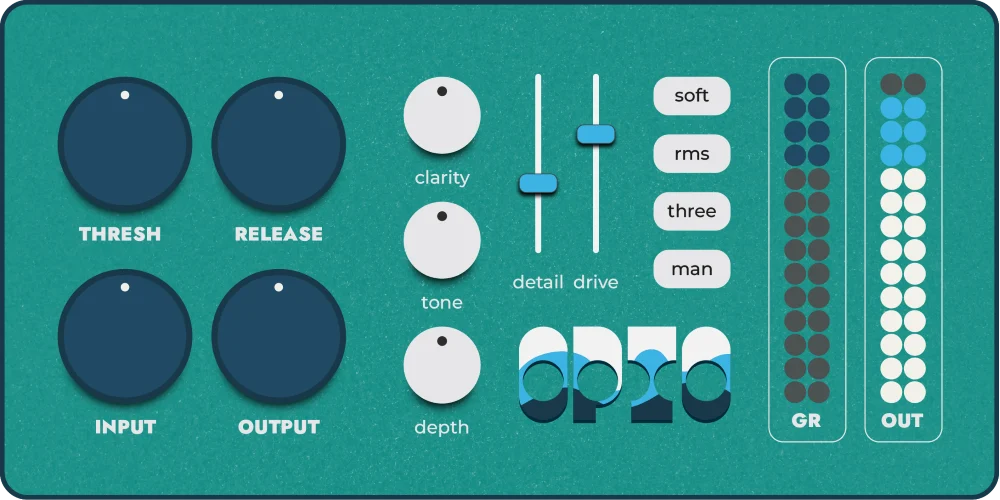
In the rapidly evolving landscape of digital audio workstations (DAWs), the quest for "analog warmth" remains the industry’s primary objective. On July 22, 2026, developer fedDSP officially entered this competitive arena with the launch of OPTO, a multi-mode optical compressor designed to bridge the gap between vintage character and modern, surgical precision. By integrating four distinct compression behaviors into a single interface, the plugin promises to redefine how engineers approach gain reduction, offering a toolset that is as suitable for tracking as it is for final mastering.
The Evolution of Optical Compression: Main Facts
At its core, the optical compressor is revered for its non-linear response and "musical" gain reduction. Unlike VCA or FET compressors, which rely on rapid electronic detection, optical compressors (or "Optos") use a light-dependent resistor (LDR) to control attenuation. This physical limitation—the time it takes for light to decay—gives the Opto its signature smooth, program-dependent character.
fedDSP’s new OPTO plugin seeks to emulate this legendary hardware behavior while expanding upon it significantly. The plugin features four distinct "modes," each meticulously engineered to alter the compressor’s feel, saturation profile, and timing.
- Mode Three: Engineered for aggression, this is the "in-your-face" setting. It offers faster attack and release times, designed to inject punch and presence into drums, percussion, or lead instruments that need to cut through a dense mix.
- Mode Two: This mode leans into vintage nostalgia. With a slower, more deliberate response, it is optimized for rounding out vocals, bass guitars, and acoustic instruments, providing that coveted "glue" without sacrificing transient detail.
- Mode One: Tailored for modern production, this mode provides a hi-fi, polished finish. It is specifically suited for the demands of contemporary pop, hip-hop, and electronic music, where clarity and controlled dynamics are paramount.
- Mode Zero: Designed for transparency, this is the cleanest of the quartet. It serves as a modern utility when the engineer requires precise gain control without altering the harmonic signature of the source audio.
A Chronological Perspective: Development and Release
The release of OPTO follows a period of intense interest in specialized, character-driven plugins within the pro-audio community. While digital processing has long mastered the technical aspects of compression, the "feel" of hardware has been a moving target for software developers.
Throughout early 2026, fedDSP teased a series of updates regarding their proprietary DSP modeling techniques. By mid-year, the focus shifted to the "Optical Core" project. Unlike standard modeled compressors, which often rely on a single, fixed circuit emulation, the fedDSP team spent months analyzing the response curves of various vintage LDRs and modern photo-resistor circuits.
By the time the beta phase concluded in late June 2026, the development team had successfully refined a "program-dependent" engine that could switch between four distinct response behaviors in real-time. The final release on July 22 marks the culmination of this research, positioning the plugin as a versatile "workhorse" rather than a one-trick pony.
Supporting Data: Under the Hood
Beyond the four compression modes, OPTO distinguishes itself through a suite of secondary tools designed to manipulate tone and attitude. For the modern engineer, having a compressor is only half the battle; the ability to sculpt the signal’s harmonic content is equally vital.

Shaping Tone and Attitude
The plugin includes a DRIVE parameter, which adds harmonic density and body to the signal. Critically, fedDSP notes that this is not intended to function as a distortion effect, but rather as a way to "thicken" the sound, simulating the subtle saturation of high-end analog circuitry.
To further the hardware simulation, the TRAFO tool mimics the behavior of a transformer. In hardware, transformers are responsible for "bloom" and density in the low-mids. By utilizing the TRAFO control, users can introduce that specific hardware-like thickness, adding a sense of weight to tracks that might otherwise feel sterile.
Perhaps most innovative is the DETAIL feature. This acts as a gentle upward compressor—an increasingly popular technique in modern mastering—that elevates low-level information without pushing the high-end into harshness. By lifting the "quiet parts" of a performance, engineers can achieve a sense of intimacy and presence that is difficult to capture with traditional downward compression.
Technical Specifications and Workflow
fedDSP has prioritized performance, noting that OPTO operates with zero latency and minimal CPU impact. This is a significant advantage for users who wish to place the plugin on every track of a large session or use it for real-time tracking, where latency can disrupt a performer’s rhythm.
Furthermore, the plugin’s user experience is bolstered by:
- Clarity, Tone, and Depth: Dedicated controls for global frequency balance and low-end weight.
- Advanced Routing: High-pass and low-pass filters, parallel mix knobs, and dual mono/stereo operation.
- Side-Chain Control: A variable side-chain high-pass filter (HPF) allows the compressor to ignore "muddy" low-end frequencies, ensuring the gain reduction is triggered by the musical elements that matter most.
- Workflow Enhancements: Keyboard shortcuts and an offline-first licensing system—free from dongles or constant internet connectivity—address long-standing complaints from professional engineers regarding software stability and licensing friction.
Official Responses and Industry Reception
The initial reaction to the launch of OPTO has been largely positive, particularly among the independent mixing and mastering community. While large-scale studios have historically relied on hardware for these specific tasks, the move toward "in-the-box" workflows has necessitated plugins that don’t just "behave" like hardware, but "feel" like it.
In a brief statement accompanying the release, the fedDSP development team emphasized that the project was born out of a frustration with modern compression that often sounds "forced." By focusing on the optical light-decay characteristic, they believe they have achieved a more natural, musical movement that serves the song rather than simply clamping down on the signal.

Industry analysts note that the introductory pricing strategy—£35 until August 6, 2026, before rising to £75—is a clear play to build a loyal user base rapidly. By positioning the plugin as an essential, high-quality tool at a mid-tier price point, fedDSP is challenging established giants in the DSP market.
Implications for the Future of Mixing
The introduction of a tool as flexible as OPTO suggests a shifting trend in audio engineering. As production cycles accelerate, engineers are demanding "all-in-one" solutions that provide both the dynamic control of a compressor and the color-shaping capabilities of an EQ or saturator.
The implications for the industry are three-fold:
- Democratization of "Color": By providing transformer-like "bloom" and harmonic saturation in an affordable plugin, fedDSP is making high-end studio sounds accessible to home-studio producers.
- The Death of "Sterile" Digital Sound: As more developers refine their DSP models to include program-dependent behavior and non-linear harmonic distortion, the distinction between "digital" and "analog" continues to blur.
- Workflow-Centric Development: The inclusion of keyboard shortcuts, low CPU usage, and offline licensing shows that developers are finally listening to the practical needs of engineers who work in high-pressure, deadline-driven environments.
Final Thoughts
As of late July 2026, the plugin is available for purchase and free trial directly through the fedDSP website. For those looking to add a versatile, character-rich compressor to their arsenal, OPTO represents a sophisticated option that balances the needs of the past (vintage optical feel) with the requirements of the future (modern workflow efficiency).
Whether used to add subtle glue to a master bus or to bring aggressive punch to a drum kit, the OPTO’s multi-mode architecture ensures that it will likely remain a fixture in the plugin folders of engineers for years to come. As the professional audio world continues to move toward more complex, hybrid workflows, tools like OPTO are proving that the future of sound is not just about precision—it is about the character of the journey.