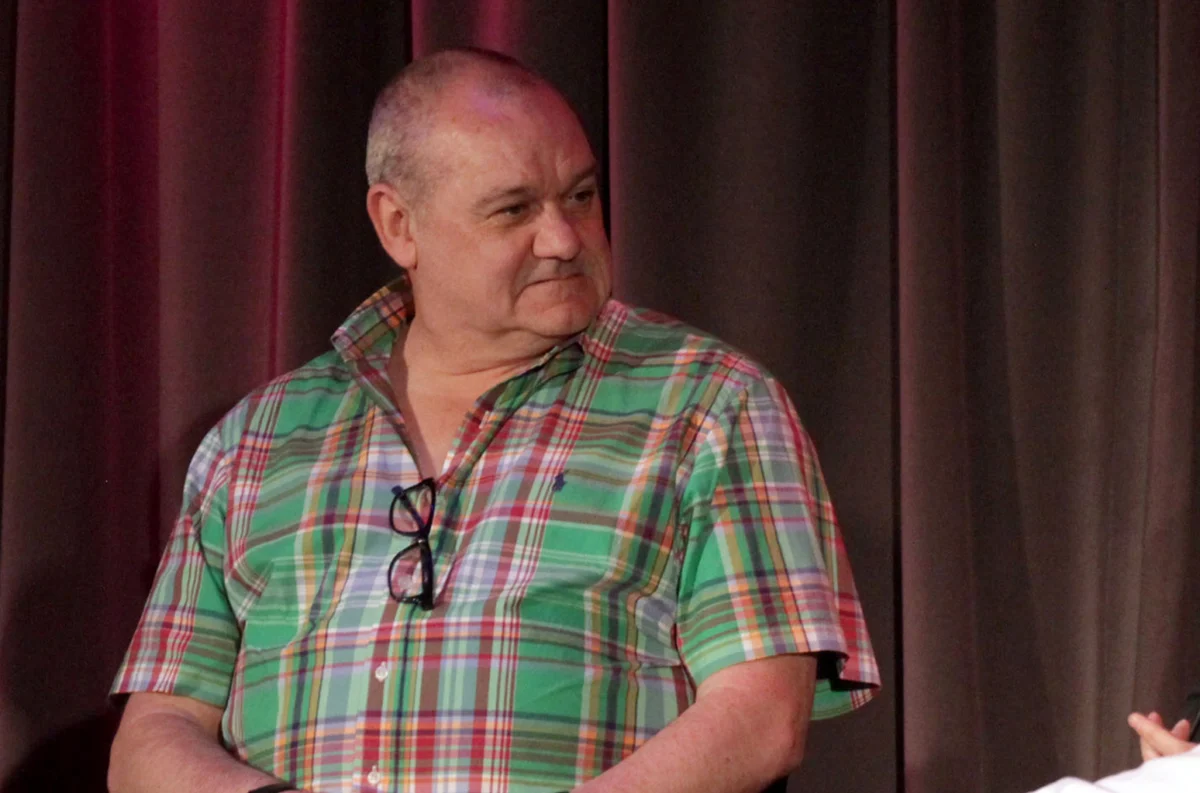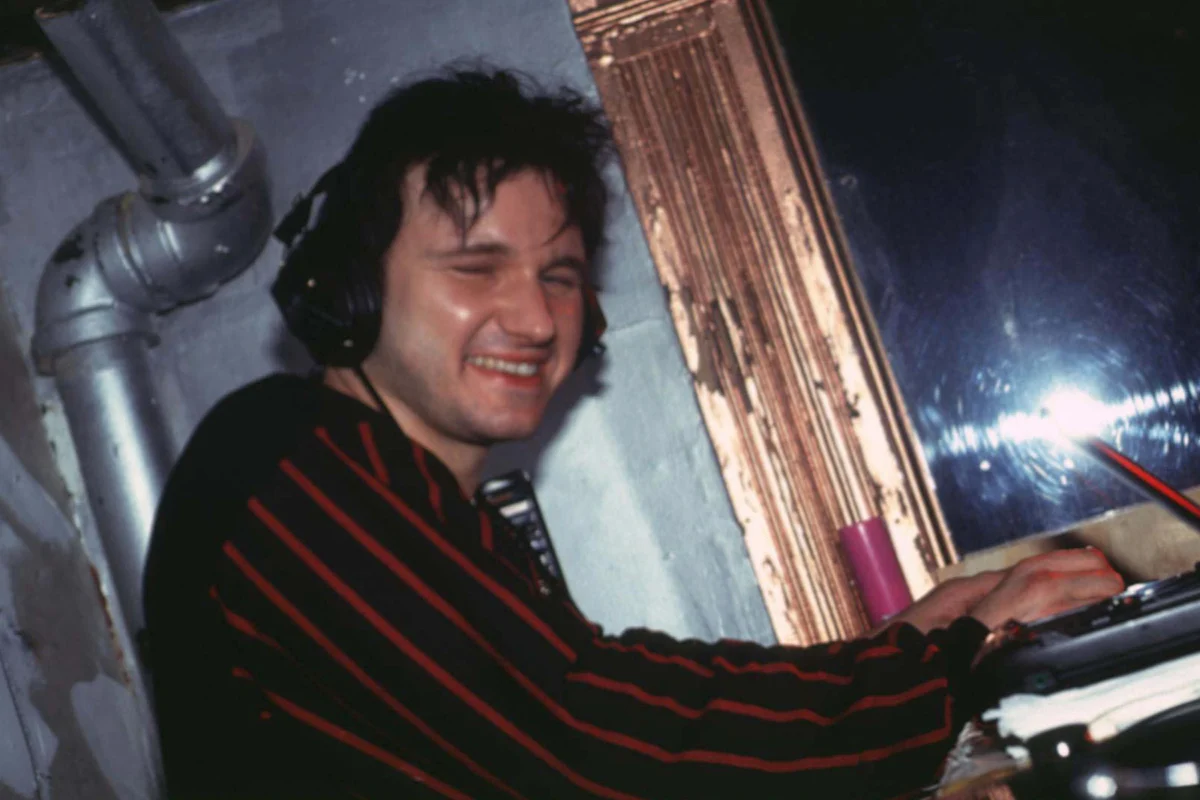
The landscape of modern music history is paved with the efforts of gatekeepers and tastemakers who dared to champion the unconventional. Among the most influential of these was Dave Kendall, the British journalist and broadcaster who served as the quintessential face of alternative rock during its most explosive era. Kendall, who guided a generation of music fans through the sonic frontier of the late 1980s and early 1990s as the host of MTV’s 120 Minutes, has passed away at age 68.
His death, announced on Tuesday, July 14, by his longtime colleague and successor, Matt Pinfield, marks the end of a chapter for a generation that viewed television not merely as a source of entertainment, but as a vital portal to underground discovery.
A Legacy Built on Authenticity
Dave Kendall did not simply introduce music videos; he curated an aesthetic and a subculture. During his tenure at the helm of 120 Minutes—the program that brought the ethos of independent and college radio to the global stage—Kendall became a trusted authority for viewers hungry for sounds that existed outside the polished sheen of Top 40 pop.
“Dave was one of the true believers,” wrote Matt Pinfield in a poignant tribute on Instagram. “Long before alternative music found its way into the mainstream, he was there every week on 120 Minutes, introducing people to bands that would go on to define an era. He didn’t just host a show. He gave a home to music that deserved to be heard. He loved the music, respected the artists, and connected with fans in a way that always felt authentic. That’s a rare gift.”
Pinfield’s tribute underscores the gravity of Kendall’s contribution. At a time when MTV was the primary vehicle for cultural dissemination, Kendall was the lighthouse for the disenfranchised, the weird, and the forward-thinking, proving that alternative rock was not just a passing trend, but a permanent shift in the musical lexicon.
A Life in Media: From Print to the Screen
Born in England, Kendall’s path to becoming a household name began in the trenches of music journalism. Before he was a VJ, he was a writer—an observer of the scene who understood the narrative weight of a well-crafted review or profile. His early career saw his byline in prestigious publications such as Melody Maker, Spin, and the New York Post. This foundational experience in print informed his later approach to broadcasting; he was never a mere “talking head,” but a journalist who approached his subjects with a deep respect for the craft of music-making.
After relocating to New York, his transition into television was seamless. Hired by MTV to develop and host 120 Minutes, Kendall spent seven years shaping the channel’s identity. His dual role as writer, producer, and presenter allowed him to exert a unique influence on the show’s editorial direction. He didn’t just recite scripts; he helped define the editorial tone of the show, bridging the gap between the chaotic energy of the underground scene and the mass-market accessibility of cable television.
Chronology of an Alternative Icon
To understand Kendall’s impact, one must look at the timeline of his career, which spanned decades of technological and cultural evolution.
- The Print Era: Before his move to New York, Kendall established himself as a respected voice in the UK and US music press. His work with Melody Maker solidified his credentials as a critic who could identify the next big movement before it hit the mainstream.
- The MTV Years (1988–1995): This period represents the zenith of Kendall’s influence. As the host of 120 Minutes, he provided the platform for the explosion of grunge, shoegaze, and indie rock. His most iconic moment occurred in September 1991, when he premiered the video for Nirvana’s “Smells Like Teen Spirit.” That broadcast is widely cited as the moment alternative rock officially crossed the rubicon into the American mainstream.
- Post-MTV Diversification: Following his departure from the network, Kendall refused to rest on his laurels. He hosted the nationally syndicated Music Scoupe, served as an anchor for the historic Woodstock ’94, and hosted the international concert event Soccer Rocks the Globe.
- The Digital Transition: Kendall was an early adopter of new media, creating the video streaming site alterworld and contributing content development expertise to Soundbreak.
- The Global Chapter: In 2011, he moved to Bangkok, Thailand. He transitioned into travel media, hosting and producing the show Destination Thailand, and eventually pivoted back to his journalistic roots, writing and editing for the Bangkok Post beginning in 2017.
Supporting Data: The Impact of 120 Minutes
The success of 120 Minutes under Kendall cannot be overstated. Throughout the late 80s and early 90s, the program consistently outpaced expectations, proving that there was a massive, untapped audience for non-commercial music.

While commercial radio stations were often hesitant to play songs that didn’t fit a specific format, Kendall’s show provided a sanctuary. The show’s playlist included seminal acts like The Cure, Sonic Youth, R.E.M., The Pixies, and, eventually, the bands that would dominate the 90s.
Kendall’s influence also extended into radio. Throughout his career, he worked extensively in both local and syndicated radio, translating his on-camera charisma into the audio format. His residency at New York’s iconic Limelight club—which lasted seven years—showcased his ability to read a room, further cementing his reputation as an arbiter of taste. His 2002 mix CD, A Voyage Into Trance, Volume 2, served as a reminder that his musical interests were not limited to rock, but spanned the entire spectrum of electronic and dance culture as well.
Official Responses and Industry Recognition
The news of Kendall’s passing has triggered an outpouring of grief from across the music industry. Beyond Matt Pinfield, numerous former colleagues, artists, and fans have taken to social media to share anecdotes about his humility and his genuine passion for the music he covered.
For many artists, being featured on 120 Minutes was a career-defining milestone. Kendall was known for conducting interviews that prioritized the music over the hype. He treated every guest—from legends like David Bowie to then-unknown indie acts—with the same level of professional courtesy and intellectual curiosity.
"He was the gatekeeper who actually wanted to open the gate," one former MTV producer noted on social media. "He believed that if the audience was just exposed to the right song, they would change their lives. And he was right."
The Implications of a Lost Voice
The passing of Dave Kendall serves as a reminder of the fragility of cultural memory. In the modern era of algorithmic playlists and hyper-personalized content, the role of the human tastemaker has been significantly diminished. Kendall belonged to an era where discovery was an event—a communal experience facilitated by a trusted guide.
His death is not only a loss for his friends and family but for the history of music media. He occupied a space where television could function as an educational tool, turning millions of teenagers onto artists who challenged their perceptions of what popular music could be.
As we look back on the career of Dave Kendall, it is clear that his contribution went far beyond the screen. He helped construct the infrastructure of the alternative music scene, providing a megaphone for the voices that defined a generation. Whether through his writing, his hosting, or his pioneering efforts in digital media, Kendall remained a consistent, authentic, and passionate advocate for the power of the song.
While the music industry continues to evolve, the blueprint Kendall established remains relevant. He proved that authenticity is not a marketing tactic but a commitment to the art itself. As the lights dim on the career of this legendary VJ, the echo of the music he championed continues to resonate, reminding us all that, in the words of those who knew him best, he was truly one of the true believers.