In the hyper-financialized ecosystem of modern American markets, an investor’s portfolio is often viewed as a reflection of their values. For years, this meant "ESG" (Environmental, Social, and Governance) funds that screened out oil companies or weapons manufacturers. However, as the political and social footprint of the world’s wealthiest individual, Elon Musk, has expanded, a new market niche has emerged: the “Ex-Elon” movement.
Subversive Capital, an investment firm known for its unconventional, headline-grabbing financial products, has officially filed for two new exchange-traded funds (ETFs) designed for investors who want broad market exposure while systematically purging their holdings of any association with the Tesla and SpaceX mogul. By launching the Nasdaq-100 Ex-Elon Enterprises ETF (QQNE) and the S&P 500 Ex-Elon Enterprises ETF (SPNE), the firm is testing whether "anti-personality" investing is a viable long-term strategy or merely a passing political statement.
The Genesis of the Anti-Musk Movement
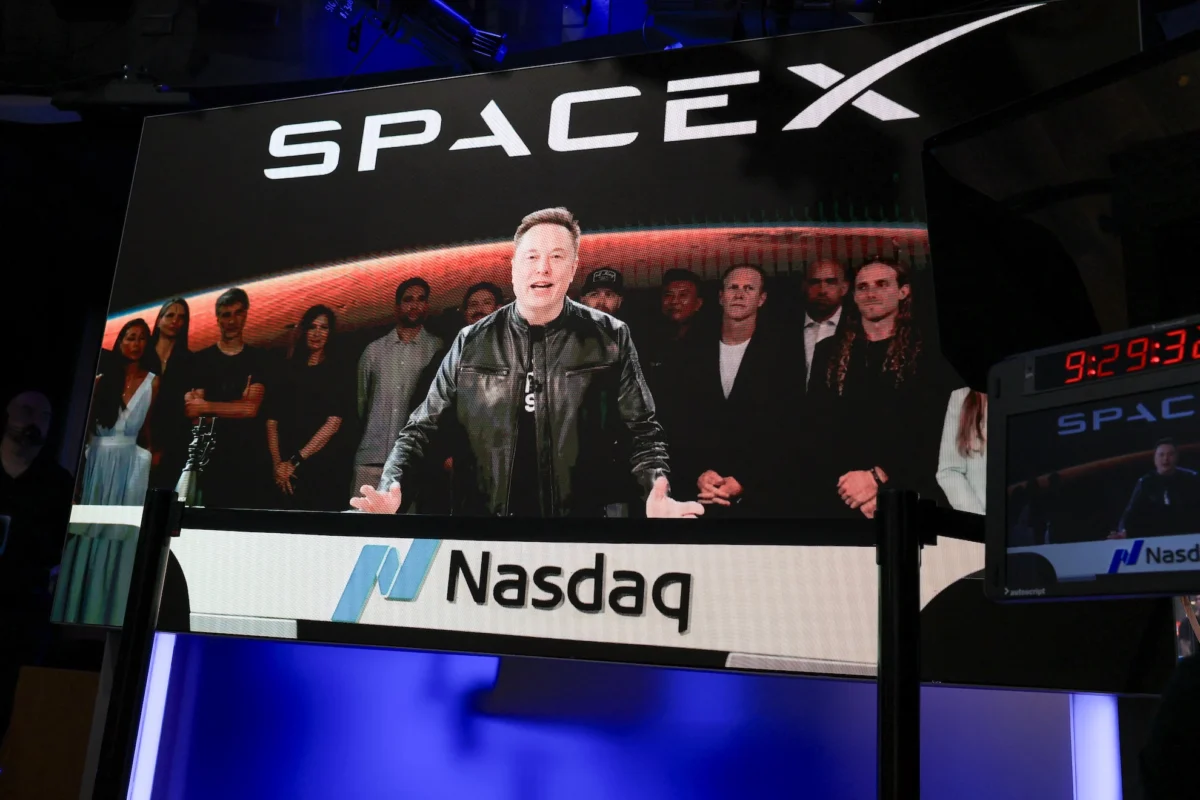
To understand the necessity of these funds, one must look at the structural dilemma facing the modern index investor. The S&P 500 and the Nasdaq-100 are the bedrock of retirement accounts, 401(k) plans, and retail brokerage portfolios. Because Tesla is a massive component of these indices, and SpaceX has recently secured its place in the Nasdaq 100 following its high-profile IPO, it is nearly impossible for the average investor to own a standard index fund without also owning a slice of Musk’s empire.
The decision by Subversive Capital to launch these funds was not born in a vacuum. It follows a volatile period in Musk’s public life. From his intense involvement in the Department of Government Efficiency (DOGE) and his aggressive commentary on the platform X (formerly Twitter), to the controversial optics surrounding his appearances during the 2026 presidential inauguration, Musk has become a polarizing figure. For many investors, the issue is no longer just financial performance; it is a question of alignment with personal ethics and corporate governance standards.
A Chronology of Financial Friction
The trajectory of Musk’s relationship with the public markets has shifted from "visionary entrepreneur" to "political lightning rod."
- 2023-2024: Tesla’s stock experiences extreme volatility as Musk’s time is increasingly split between X, AI ventures, and political commentary. Investors express concern regarding "key-man risk," where the company’s success is tethered to the whims of its CEO.
- June 2026: SpaceX holds its long-awaited IPO, immediately securing a spot in major indices. This forces passive funds and institutional investors to add the stock to their portfolios.
- July 2026: Following a series of highly publicized political gestures and remarks, market sentiment regarding Musk reaches a breaking point for a segment of the retail investor base.
- August 2026: Subversive Capital files the prospectus for the Ex-Elon ETFs with the U.S. Securities and Exchange Commission (SEC), officially formalizing the "Ex-Elon" strategy as a tradable asset.
Supporting Data: The Concentration Dilemma
The reliance of major indices on Musk-led entities is statistically significant. Because both the S&P 500 and Nasdaq-100 are market-cap-weighted, the largest companies carry outsized influence. When Tesla or SpaceX fluctuations occur, they move the needle for every investor holding a standard Vanguard or BlackRock index fund.
According to filings, the Ex-Elon funds will specifically exclude companies founded, controlled, or led by Musk, or those with which he is “primarily associated.” While the initial targets are Tesla (TSLA) and SpaceX (SPCX), the prospectus leaves the door open to purge other entities should they be brought into the fold. This creates a "dynamic exclusion" model, where the fund managers act as an ethical gatekeeper, monitoring Musk’s future business ventures and removing them from the portfolio if they meet the criteria for exclusion.
This is a departure from traditional index investing, which is usually passive and rule-based. By injecting human judgment into the selection process, Subversive Capital is essentially selling an active management strategy under the guise of an ETF.
The "Subversive" Playbook
Subversive Capital is no stranger to provocative financial products. Their previous offerings—funds that mirror the stock trades of both Democratic and Republican members of Congress—have demonstrated that investors are increasingly interested in "political beta." By tracking the portfolios of politicians, the firm tapped into the public’s desire to "invest like the oligarchy," effectively monetizing political transparency and cynicism.
The Ex-Elon funds represent the inverse of this strategy. Rather than following the leaders, they are actively boycotting them. It is, in many ways, a "short" on Musk’s personal brand. By branding these as "Ex-Elon" funds, the firm is leaning into the tongue-in-cheek nature of the industry, acknowledging that these funds serve as both a financial tool and a protest mechanism.
Implications: The Future of "Value-Based" Investing
The launch of these funds raises profound questions about the future of corporate governance and index composition. If a significant number of investors begin to demand "Ex-CEO" indices, it could pressure fund managers to offer more customizable investment vehicles.
1. The Erosion of "Neutral" Indices
Historically, indices like the S&P 500 have been viewed as neutral representations of the U.S. economy. If investors begin to view these indices as politically charged due to the presence of controversial CEOs, the demand for "filtered" indices will likely grow. This could lead to a fragmentation of the market, where "clean" indices compete with "traditional" ones.
2. The Power of Retail Sentiment
For years, institutional investors dictated the terms of market participation. However, the rise of commission-free trading and social media-driven investing has empowered retail participants. The Ex-Elon funds are a direct response to this shift; they provide a product that allows individuals to vote with their capital. Whether or not these funds outperform the market is, for many, secondary to the act of exclusion.
3. The "Musk Premium" and Hostility
Musk’s well-documented hostility toward short-sellers and critics is well-known. By creating a fund specifically designed to divest from his companies, Subversive Capital is engaging in a form of financial theater that Musk is likely to notice. If these funds gain traction, they could become a focal point for the very volatility Musk despises, as investors move capital away from his orbit and into broader alternatives.
Official Responses and Regulatory Outlook
The SEC filing for the Nasdaq-100 Ex-Elon Enterprises ETF and the S&P 500 Ex-Elon Enterprises ETF is currently under review. While the funds are legally compliant, the regulatory body remains vigilant regarding the transparency of the "exclusion criteria."
When asked about the launch, representatives from Subversive Markets Lab LLC emphasized that the funds are intended to provide "capital appreciation through exposure to a broad universe of large-capitalization U.S. equity securities, while excluding the equity securities of companies that are founded, controlled, or led by Elon Musk." They argue that this is simply an extension of the existing "socially responsible" investment movement, which has always allowed investors to choose what they do—and do not—want to support.
Conclusion: A Barometer of the Times
Whether the Ex-Elon ETFs, tickers QQNE and SPNE, will become staples of the modern portfolio remains to be seen. Their success will depend on two factors: the market performance of the companies they exclude and the intensity of the "anti-Musk" sentiment among retail investors.
If Tesla and SpaceX continue to dominate the growth sectors of the economy, investors in these new ETFs may find themselves lagging behind the broader market. However, for a growing segment of the population, the price of "peace of mind" is a trade-off they are willing to make. As we move into the latter half of the decade, these funds serve as a clear indicator of a changing financial landscape—one where personal values, political leanings, and corporate governance are increasingly inseparable from the bottom line.
Ultimately, Subversive Capital has identified a truth about the current market: in an age where the personal lives of CEOs are broadcast to millions, the "brand" of a company is no longer just about its products—it is about the person at the helm. By offering a way to opt-out, they are not just selling a fund; they are selling a form of financial autonomy in an increasingly complex world.