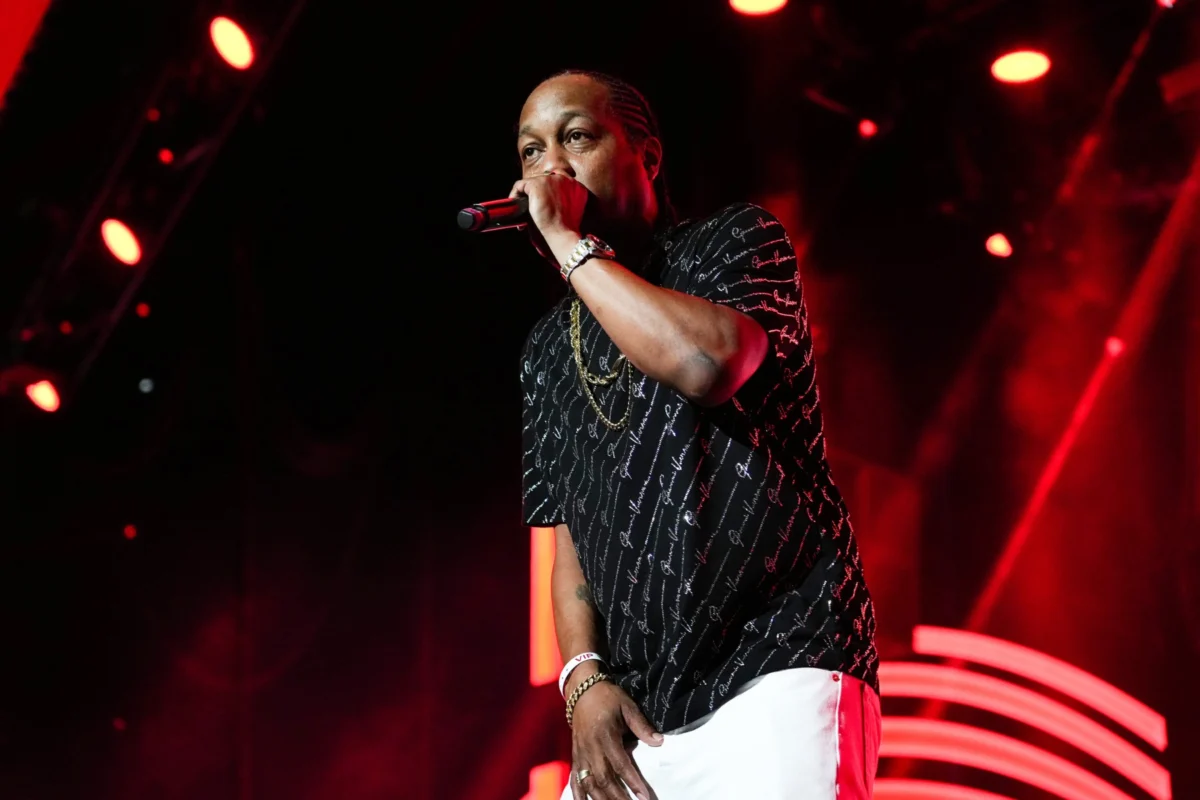
The world of hip-hop is mourning not just the artistic legacy of its pioneers, but the very real, often devastating consequences that can ripple through the families of those who shaped the genre. David Marvin Blake, Jr., the son of legendary West Coast producer and rapper DJ Quik, remains at the center of a tragic legal saga that culminated earlier this year in a significant prison sentence. In a recent, candid interview with TSR Live, the iconic producer opened up about the emotional toll of his son’s conviction, the legal battle ahead, and the struggle to navigate public scrutiny during an intensely private family crisis.
The Core Facts: A Life Altered by Violence
David Marvin Blake, Jr. was sentenced to 15 years to life in prison this past February following a high-profile trial that gripped the Los Angeles legal community. The conviction stems from a fatal incident that occurred in 2022 in Downey, California, a suburb of Los Angeles. Blake, Jr. was found guilty of second-degree murder in the death of 33-year-old Julio Moises Cardoza Jr.
The sentencing, handed down by a Los Angeles County Superior Court judge, marks the definitive end of the initial criminal proceedings, though it serves as the beginning of a long road of incarceration for the 28-year-old. For DJ Quik—born David Marvin Blake—the verdict has been a source of profound, complex grief. Speaking to The Shade Room, the producer articulated the difficulty of watching his son be processed by the judicial system, characterizing the legal proceedings as a period of "madness" and asserting that his son was "scapegoated" during the trial.
Chronology of a Tragedy
The events leading to the sentencing were set in motion in 2022. While the details of the specific interaction that led to the shooting have been dissected in court, the outcome was an irreversible loss of life. Julio Moises Cardoza Jr., only 33 at the time of his death, left behind a family and community now forced to grapple with the aftermath of the shooting.
Following the incident, law enforcement conducted an extensive investigation, leading to the arrest of the younger Blake. The case proceeded through the California court system over the course of nearly two years. In December 2023, a jury returned a verdict of guilty for second-degree murder, a charge that carries severe mandatory minimums in the state of California.
By February 2024, the sentencing phase concluded with the judge opting for the 15-to-life sentence. Throughout the trial, the defense team, supported by the elder Blake, maintained that the circumstances of the incident were far more nuanced than the prosecution’s narrative suggested. Despite these efforts, the conviction stood, prompting the filing of an appeal, which remains the next major hurdle in the legal timeline.
Examining the Legal Context and Supporting Data
In California, a second-degree murder conviction carries a standard sentence of 15 years to life. This means that after serving a minimum of 15 years, the defendant becomes eligible for a parole board hearing, where their suitability for release will be determined based on their conduct in prison, rehabilitation efforts, and the nature of the original offense.
The trial of David Marvin Blake, Jr. drew significant attention not only due to his father’s fame but also because of the specific challenges involved in proving intent in a second-degree murder case. In the state of California, second-degree murder is defined as an unlawful killing with malice aforethought, but without the premeditation and deliberation required for first-degree murder.
Legal experts often point to cases of this nature as examples of the "felony murder rule" or other complex statutes that can lead to lengthy sentences even when the perpetrator did not necessarily arrive at the scene with a premeditated intent to kill. For the Blake family, the emphasis remains on the fact that the younger Blake had no prior interaction with law enforcement. As noted by the presiding judge during the sentencing hearing, his lack of a criminal record was a point of acknowledgment, suggesting that the event was viewed by the court as a singular, catastrophic lapse in judgment.
Official Responses: DJ Quik’s Perspective
The most striking aspect of the recent news cycle has been the vulnerability shown by DJ Quik. Known for his stoic, influential presence in the G-funk era, Quik has rarely invited the public into his personal life. However, the gravity of his son’s situation has forced a shift in how he interacts with his fanbase.
"Lil Dave is hanging in there," the elder Blake told TSR Live. "I like to say that he’s built for it and he knows he’s been put in a position to where he was scapegoated."
Quik’s frustration with the trial process is palpable. He expressed that had the public been present to witness the trial’s proceedings, they would have seen the chaotic nature of the prosecution’s case. Despite this, he acknowledged that his son has largely accepted the reality of his situation. "David has already accepted what’s happened. He accepted his role in it and he’s like, ‘Whatever it’s gonna be is gonna be.’"
Perhaps the most poignant moment of the interview came when Quik addressed the public’s tendency to treat his son’s legal status as a conversation starter. He made a direct, emotional plea for privacy: "I’m a little bit too emotional to be in public because when people ask me about it in public, I don’t respond with kindness. And I’m not going to apologize for that. Stop asking me about my son in public."
The Implications: Beyond the Verdict
The conviction of David Marvin Blake, Jr. serves as a stark reminder of the fragile nature of life and the permanent impact of split-second decisions. The ripple effects are twofold: there is the immense, irreparable loss experienced by the family of Julio Moises Cardoza Jr., and there is the profound heartbreak of a father watching his child lose the prime of his life to the carceral system.
The Role of Advocacy and Appeals
As the case moves into the appellate phase, the legal focus will shift toward identifying potential procedural errors or issues regarding the jury instructions that might warrant a retrial or a reduced sentence. Quik noted that his son’s legal counsel has been "diligent," signaling that the family is not finished fighting for a different outcome.
The Impact on Public Figures
The discourse surrounding this case highlights a recurring issue in celebrity culture: the blurring of lines between a public figure’s art and their private family tragedies. When a family member of a star is involved in a high-profile criminal case, the media often turns the tragedy into a spectacle. DJ Quik’s plea for fans to respect his boundaries is an assertion of humanity in an industry that often expects celebrities to be perpetually accessible.
A Lesson in Accountability
Finally, the case touches upon the broader societal conversation regarding youth, impulse control, and the justice system. Quik’s reflection—"He was raised right. He just made a mistake"—is a sentiment echoed by countless parents of incarcerated youth. It highlights the tension between holding individuals accountable for their actions and recognizing the potential for redemption in those who have otherwise lived clean, law-abiding lives.
Conclusion
As David Marvin Blake, Jr. begins his sentence, the story of his conviction serves as a somber chapter in the history of the West Coast hip-hop community. For DJ Quik, the path forward is one of endurance, marked by the ongoing legal appeals and the difficult task of balancing his career with the reality of his son’s imprisonment.
While the legal system has rendered its initial judgment, the human element of the story remains unresolved. As the appeal process unfolds, the public is reminded that behind every headline regarding a "convicted felon" or a "celebrity son," there are families—both that of the perpetrator and the victim—who must navigate the long, quiet aftermath of a life-altering tragedy. For now, the music world looks on with a mixture of sympathy and somber reflection, awaiting the final resolution of a case that has left no one untouched.