For nearly two decades, the backbone of the modern digital economy—and the training ground for the AI revolution—was a service that operated on a curious, paradoxically manual premise. Amazon’s Mechanical Turk (MTurk), a platform that promised to outsource tasks that "resisted full automation" to a global army of human workers, is nearing its end.
In a quiet update to its developer documentation, Amazon Web Services (AWS) revealed that, effective July 30, 2026, the Mechanical Turk marketplace will officially close to new customers. While current users are permitted to continue operations, the platform is effectively on life support. There will be no new feature development, no modernization of its aging infrastructure, and no growth. After twenty-one years of operation, the pioneer of "crowdsourced labor" is being quietly ushered toward the exits.
The Main Facts: A Service in Stasis
The announcement marks the beginning of a long goodbye for a platform that once sat at the intersection of Silicon Valley ambition and the gig economy. AWS noted that the decision was reached after "careful consideration," though they provided little insight into the specific financial or strategic triggers behind the move.
For the thousands of "Turkers"—the independent contractors who log in to perform micro-tasks like image labeling, sentiment analysis, and data entry—the news was hardly a surprise. For years, the platform had been plagued by internal issues, ranging from a decline in task quality to an influx of bot activity. By freezing new customer acquisitions, Amazon is signaling that the era of human-in-the-loop, low-cost micro-labor is being eclipsed by the very AI models those workers helped train.
A Chronology of the Crowd: From 2005 to 2026
To understand the significance of MTurk’s closure, one must look at the arc of its evolution.
- 2005: The Launch. Amazon introduced Mechanical Turk with the goal of solving problems that were easy for humans but difficult for computers. Named after an 18th-century hoax—a chess-playing machine that actually concealed a human master inside—the name was a stroke of self-aware irony.
- 2008–2012: The Ethics Debate. As the platform grew, it became a lightning rod for labor advocates. Critics argued that the "penny-per-click" compensation model created a digital sweatshop, where workers in developing nations and the U.S. alike performed rote labor for wages that rarely met minimum standards.
- 2018: The SageMaker Pivot. Amazon rebranded the service as an essential tool for training neural networks. Through integration with AWS SageMaker, MTurk became the "ground truth" engine for machine learning, helping AI models learn to recognize stop signs, transcribe audio, and summarize text.
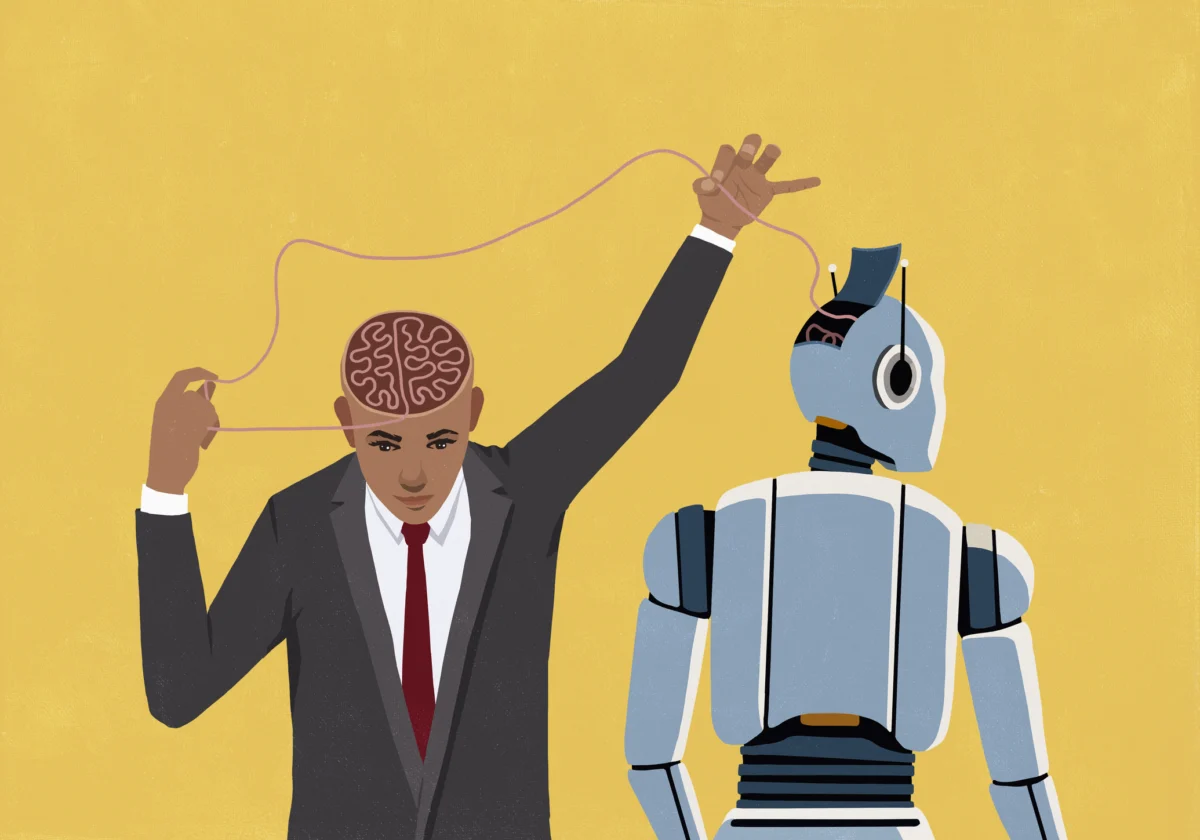
- 2023: The Ouroboros Effect. Researchers discovered that the platform had begun to consume itself. A significant percentage of MTurk workers were utilizing generative AI to complete the tasks they were hired to perform, leading to a feedback loop where AI was effectively training on data created by other AI.
- 2026: The Sunset. The final date for new client intake, signaling the eventual decommissioning of the service.
Supporting Data: The Collapse of the "Human Loop"
The decline of Mechanical Turk is not merely a corporate decision; it is a reflection of the changing economics of artificial intelligence. For years, "Human-in-the-loop" (HITL) was considered the gold standard for AI reliability. However, the rapid advancement of Large Language Models (LLMs) has rendered much of the manual data labeling done on MTurk redundant.
Data from the platform over the last half-decade shows a steady degradation in the value of the work performed. As bots and automated scripts infiltrated the platform, the cost of verifying the "human" element began to outweigh the benefits. Furthermore, as the quality of synthetic data generated by LLMs began to rival that of human-annotated data, the business case for maintaining a global workforce of human annotators—with all the associated management overhead—simply evaporated.
Reddit threads dedicated to the platform have served as a digital graveyard for years. Long-time users, who once found the platform a vital source of supplemental income, have spent the last three years complaining about "low-paying batches," "captcha walls," and a lack of transparency from Amazon regarding the platform’s future. The consensus among the community is that the platform didn’t die in 2026; it died when it stopped being a tool for human empowerment and started becoming a dumping ground for low-quality data.
Official Responses and Corporate Strategy
Amazon’s official stance remains characteristically brief. AWS maintains that they continue to invest in "security and availability" for current customers, but the lack of new feature development is a death knell in the fast-moving world of cloud computing.
Industry analysts suggest that Amazon is shifting its focus toward more integrated, automated AI training solutions that do not rely on a decentralized, heterogeneous workforce. By pulling back from the marketplace model, Amazon is likely reducing its liability and focusing on its core cloud competencies.
"The decision reflects a broader trend in tech," says one industry observer. "Companies are moving away from messy, human-centric data collection and toward proprietary data synthesis. When you can generate your own training data with a model, you don’t need a middleman to pay someone in another time zone to identify a pedestrian in a photo."
Implications: What Happens to the Workers and the Industry?
The implications of this closure are twofold: ethical and technical.
The Ethical Fallout
For the global community of Turkers, the closure of the platform represents the loss of a digital safety net. While the wages were often criticized, the platform provided a flexible, barrier-free way for people with limited professional options to earn income. As the platform closes, these workers face a "digital displacement" that echoes the broader fears of AI-driven job loss.
The Technical Future
Technically, the demise of MTurk marks the end of the "Human-in-the-loop" era as the industry’s primary standard. The industry is pivoting toward "RLHF" (Reinforcement Learning from Human Feedback) via more curated, specialized firms rather than open, anonymous marketplaces. The "fake-it-till-you-make-it" era, where companies used human labor to mask the limitations of their AI, is being replaced by a drive toward higher-fidelity, automated, or expert-verified data.
A Fitting End for the Mechanical Turk
There is a poetic irony in the way Mechanical Turk is ending. The original 18th-century Turk was a deception—a human disguised as a machine. The modern Amazon Mechanical Turk was, in many ways, the reverse: a machine that required a human to function.
As the service winds down, it leaves behind a complex legacy. It was an engine of scientific discovery, a source of income for thousands, and a dark mirror for the tech industry’s relationship with labor. As we move into an era where artificial intelligence increasingly operates without the need for human guidance, the closure of MTurk serves as a stark reminder that the digital scaffolding used to build our future is often the first thing to be discarded once the building is complete.
For those still relying on the platform, the countdown to July 30, 2026, has begun. For the rest of the tech world, the story of the Mechanical Turk serves as a definitive case study in how quickly the "essential" becomes "obsolete" in the age of AI.