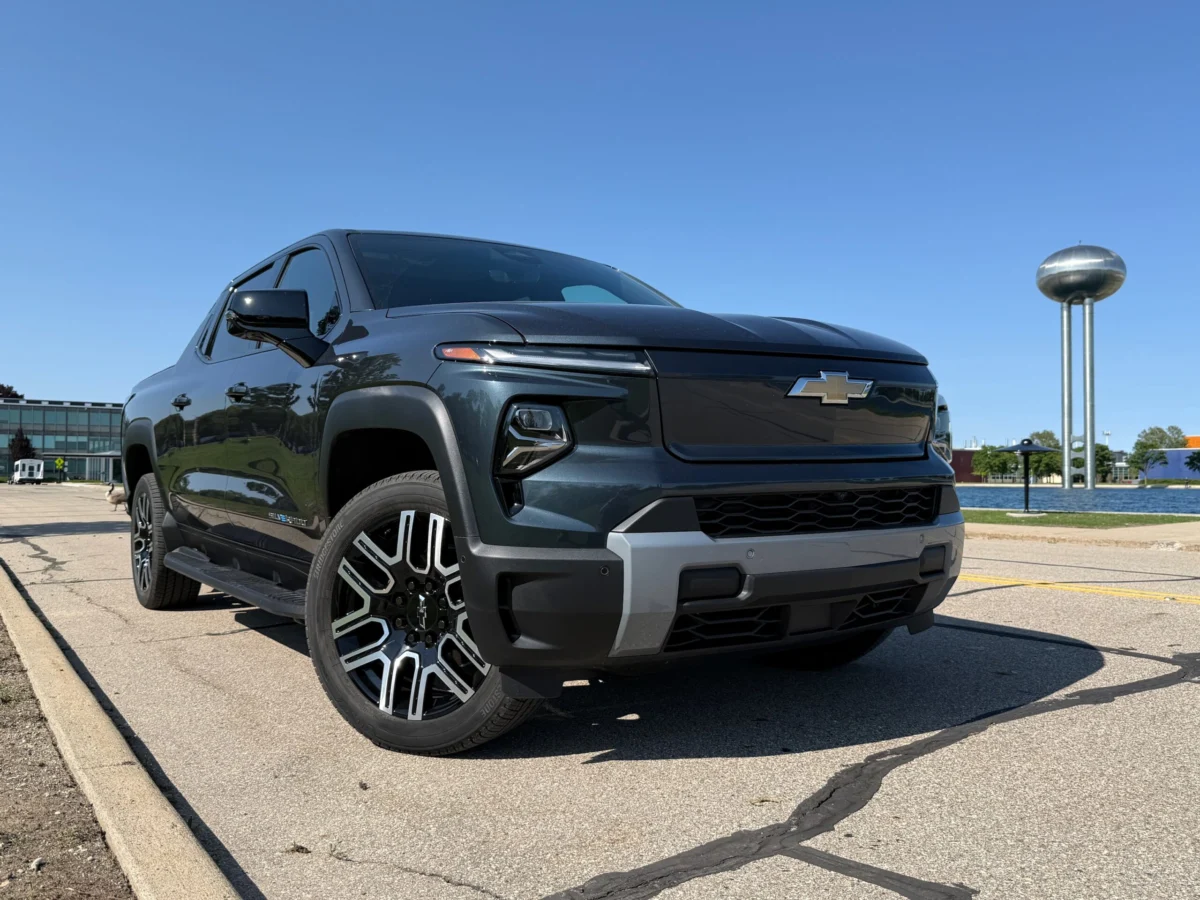
Although I grew up shifting my dad’s Chevrolet S-10 pickup truck from the passenger seat, I’ve never considered myself part of the target demographic for full-size pickups. I’ve always leaned toward the versatility of hatchbacks over the raw, open-air utility of cargo beds. However, after spending a full day navigating the streets of Detroit behind the wheel of the new Chevrolet Silverado EV, I realized that General Motors might have accidentally crafted a vehicle capable of converting even the most staunch sedan-loving skeptic.
The Silverado EV presents a fascinating dichotomy: it drives with the refined grace of a luxury car, yet its physical footprint is undeniably industrial. Its bed is massive, its "frunk" (front trunk) is cavernous enough to swallow multiple pieces of luggage, and the rear cabin offers a level of legroom that makes long-distance travel genuinely comfortable. But beyond the utility, there is the engineering—a vehicle that can power your entire home during a blackout, tow heavy loads with ease, and navigate complex freeway traffic without the driver’s hands ever touching the steering wheel. With a range exceeding 400 miles on a single charge, it represents the "dream combination" that American pickup enthusiasts have theoretically been waiting for.
And yet, the sales numbers tell a different, more puzzling story.
The Disconnect Between Excellence and Adoption
Despite its technical prowess, the Silverado EV is not exactly flying off showroom floors. General Motors reported approximately 14,000 units sold across the U.S. and Canada last year—a figure that looks stark when compared to the traditional, internal-combustion-engine (ICE) Silverado, which moves roughly 10 times that volume in a single quarter.

This creates a significant industry mystery. If the product is as polished, efficient, and capable as my test drive suggests, why are consumers staying away? The answer likely lies in a complex mix of market inertia, consumer anxiety, and the fundamental differences between legacy buyers and early adopters.
A Chronology of the Electric Shift
The journey of the Silverado EV began with high expectations and a design language that harkened back to the polarizing Chevrolet Avalanche. Much like its predecessor, the Silverado EV utilizes a four-door configuration with a "mid-gate"—a design feature that allows the rear wall of the cabin to fold down, extending the bed into the interior space for longer cargo. This design, complete with the iconic "sail" behind the cabin to improve aerodynamics, is a bold aesthetic choice. While I found the look modern and purposeful, it remains a divisive point for traditional truck buyers who equate the "truck look" with a distinct, cab-and-bed separation.
Upon entering the vehicle, the experience is unmistakably modern. Getting into the driver’s seat requires a significant step up, but once inside, the cabin feels airy and premium. The vehicle springs to life the moment you depress the brake, with crisp, high-resolution screens dominating the lower third of the dashboard. The acceleration is typical of high-end electric vehicles: immediate, punchy, and surprisingly effortless.
One of the most impressive technical feats is the rear-wheel steering. Despite the truck’s massive 20-foot length, it maneuvers through crowded parking lots with the agility of a much smaller vehicle—at least until you attempt to park it in a standard, tight suburban space. The dimensions of the truck simply cannot be ignored, regardless of the advanced steering systems.

Tech Stack: Google-Powered Infotainment
Chevy’s decision to move away from Apple CarPlay and Android Auto in its newest EVs has been a point of contention, but the integrated, Google-powered infotainment system offers a strong counter-argument. The interface is remarkably responsive, fluid, and intuitive. Voice commands are handled with a level of accuracy that makes traditional car voice controls feel archaic.
Critically, the navigation system is deeply integrated into the vehicle’s energy management. When plotting a route, the system doesn’t just provide the fastest path; it offers an estimated breakdown of how much of the trip can be completed using "Super Cruise," GM’s hands-free driver-assistance system. For the commuter who dreads the monotony of highway driving, this is a compelling feature. Furthermore, the inclusion of physical knobs for volume and climate control—a rarity in today’s screen-dominated interiors—is a nod to usability that will be welcomed by traditionalists.
Super Cruise: The Promise and the Peril
Super Cruise is, in many ways, the crown jewel of the Silverado EV’s tech suite. During my time in Detroit, I used it through peak commuting hours, and it transformed a potentially stressful slog into a relaxed experience. However, it is not infallible.
The system occasionally struggles with lane discipline, particularly when aggressive drivers cut into the lane from the right. In one instance, the truck’s sensors seemed momentarily baffled by a trailer with dirty, paint-splattered taillights, leading to a moment of sharp braking that highlighted the limits of current Level 2 automation. These are "growing pains" of the technology, but they remind the driver that even the best systems require constant, vigilant supervision.

Supporting Data: The Case Against the Skeptics
Many analysts have pointed to the price tag as the primary barrier to adoption. However, the data suggests otherwise. The average transaction price for a full-size pickup in the U.S. currently hovers around $66,000. This is remarkably close to the list price of the Silverado EV LT Extended Range, which boasts a 410-mile battery. The "Max Range" version commands a $20,000 premium, but the entry-level options are, by industry standards, competitive.
Another common refrain is the "towing anxiety." Skeptics argue that electric trucks fail when under heavy load. Yet, industry research from Strategic Vision suggests that approximately 75% of full-size truck owners tow at most once per year. If the primary demographic isn’t actually towing, the range reduction during heavy hauling—which is indeed significant—should be a non-factor for the vast majority of potential buyers.
The resistance, therefore, appears to be rooted in psychological inertia. Buyers are wary of charging infrastructure and range degradation, fears that typically vanish after a few months of actual EV ownership.
The Path Forward: Innovation and Future Costs
The current Silverado EV is a brilliant "first draft." The engineering team has done a commendable job balancing the 205 kWh battery pack—which acts as a massive stabilizer—with a ride quality that is genuinely smooth. However, there is room for improvement. Reducing the vehicle’s curb weight would be a game-changer, increasing payload and towing capacity while allowing for a smaller, more efficient battery.

General Motors is already looking toward the next phase of development. The automaker has signaled a pivot toward new lithium-manganese-rich (LMR) battery chemistry, which could potentially reduce production costs by $6,000 without sacrificing range. If those savings are passed on to the consumer, the Silverado EV could achieve true price parity with internal combustion models, potentially triggering the mass-market transition that GM is banking on.
Implications for the American Automotive Market
The failure of the market to embrace the electric pickup at this stage reflects a broader trend: the American truck market is perhaps the most conservative segment in the automotive world. Customers are loyal to brand heritage, engine sound, and a specific way of life that has been built around fossil fuels for over a century.
However, the tide may be turning. As charging networks improve and the technology becomes more reliable, the "pain points" of EV ownership will continue to dissolve. The Silverado EV is a product ahead of its time, sitting in a market that is not yet ready to let go of the past.
For me, the realization was simple: the Silverado EV is an incredible machine. It is, however, physically too large for my 1950s-era garage. I would need to buy a bigger house to fit the truck. And in a strange way, there is nothing more quintessentially American than the prospect of buying a new home just to accommodate a new vehicle. As we look toward the future of the pickup, the question isn’t whether the truck is good enough—it’s whether the American consumer is ready to stop looking at the fuel gauge and start looking at the future.