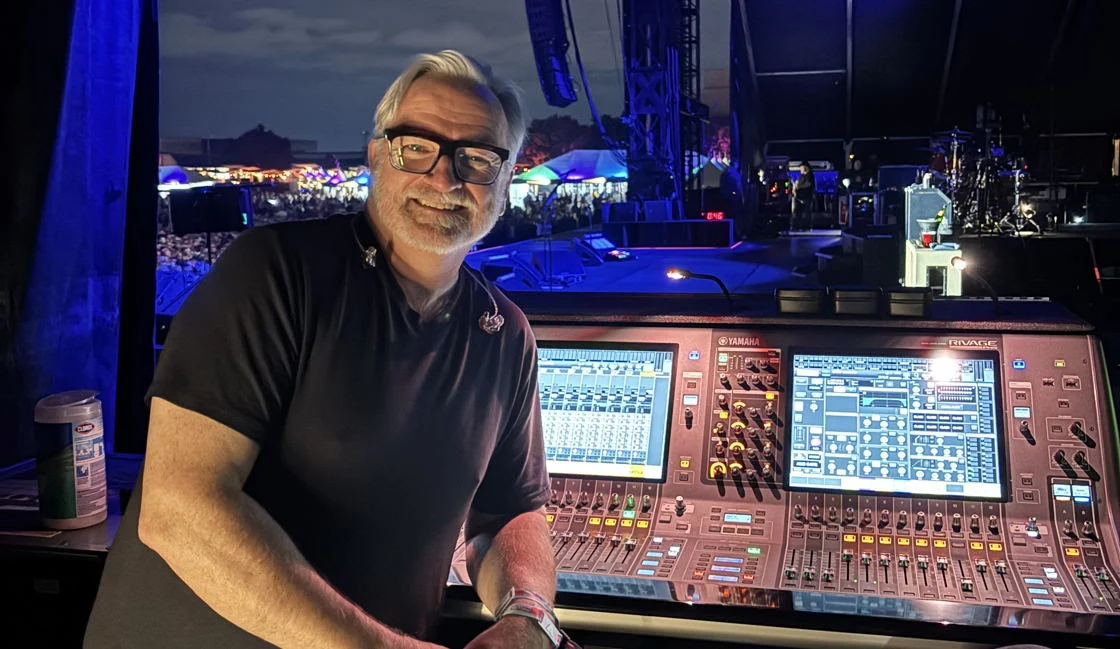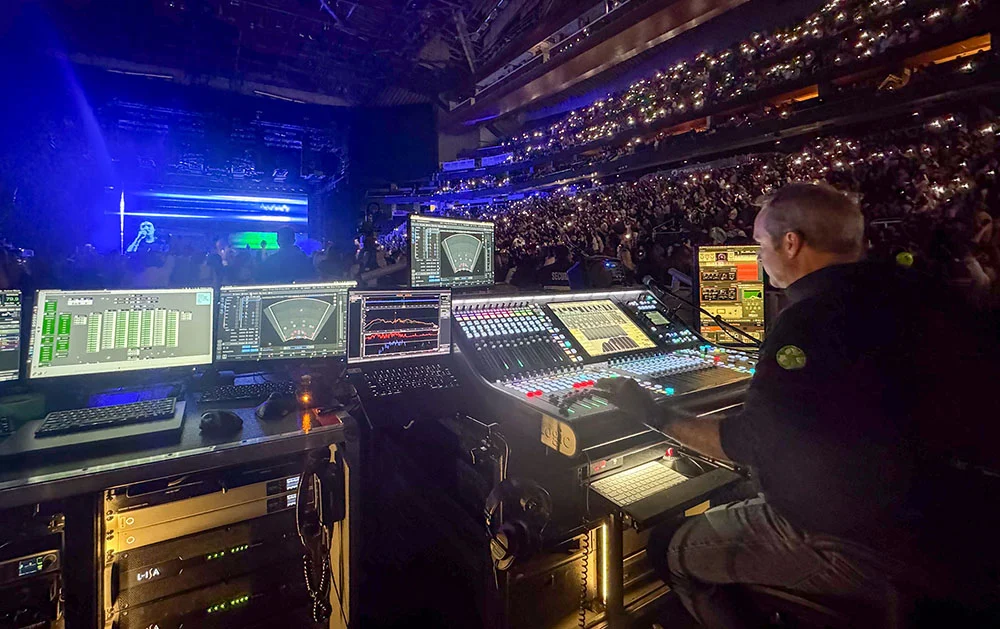
In the world of contemporary live music, the line between a concert and a sensory experience is blurring. For New Zealand-born singer-songwriter Lorde, this evolution has been central to her artistic trajectory. As she tours the globe in support of her fourth studio album, Virgin, her Ultrasound World Tour has set a new benchmark for live sound production. By pairing the revolutionary L-ISA Hyperreal Sound technology with the high-performance L Series loudspeakers from L-Acoustics, Lorde’s team—led by long-time Front of House (FOH) engineer Philip J. Harvey—has successfully bridged the gap between intimate, raw vocal performance and the sheer, overwhelming scale of an arena-sized electronic soundscape.
The Foundation: A History of Innovation
Lorde’s relationship with cutting-edge audio technology is well-documented. In 2018, during her Melodrama tour, she became a pioneer in the industry as the first artist to deploy a full arena-scale L-ISA immersive system. That early adoption laid the groundwork for the Ultrasound tour, where the objective was not just to make the music louder, but to make it more emotionally resonant.
Philip J. Harvey, an L-Acoustics Artisan of Sound, has been the sonic architect behind Lorde’s tours since her 2014 debut. Reflecting on the evolution of her sound, Harvey notes that Virgin presents a departure from her earlier, more organic arrangements. "With Virgin, the sonics are more of a hard-driving electronic vision; very dynamic, but still retain an intimacy and vulnerability," Harvey explains. "Much of the material from her past albums was reimagined and revamped to fit this tour’s aesthetic. With L-ISA, we wanted this driving force to wash over the audience like a spacious tidal wave at high points and then collapse down into soft, more mono, raw vocal moments. This dynamic contrast really makes a powerful impact."
Technical Execution: The North American Deployment
The North American leg of the Ultrasound World Tour represented the pinnacle of this sonic engineering. Supported by Clair Global, the tour utilized a complex, meticulously calibrated system designed to deliver consistent audio coverage across diverse arena architectures.
The System Architecture
The primary rig consisted of an L-Acoustics Scene system comprising five distinct arrays, each featuring three L2 units topped with one L2D enclosure. This main configuration was bolstered by two identical L Series out-fill arrays. To ensure total immersion, 12 Kara II enclosures were deployed in left and right hangs to provide 220-degree fill.
Low-end reinforcement was handled by a formidable array of 16 KS28 subwoofers, flown in two central clusters of eight. This end-fire configuration was a strategic choice to ensure phase alignment and clarity. "The low end was clear, clean, and pronounced in a way that’s rare in a large system," says Harvey. "Because all sub frequencies emanated from the same single vertical point, we eliminated the comb filtering often caused by multiple low-end sources."
Front-fill duties were equally sophisticated. A dozen L-Acoustics A10 Wide enclosures were spread across the stage lip, with additional A10 Focus and Wide units providing coverage for the thrust and far-field areas. At Madison Square Garden, the team further supplemented the system with three additional L2 units in an LCR arrangement to overcome the visual obstructions caused by the venue’s massive central video display.
Power and Processing
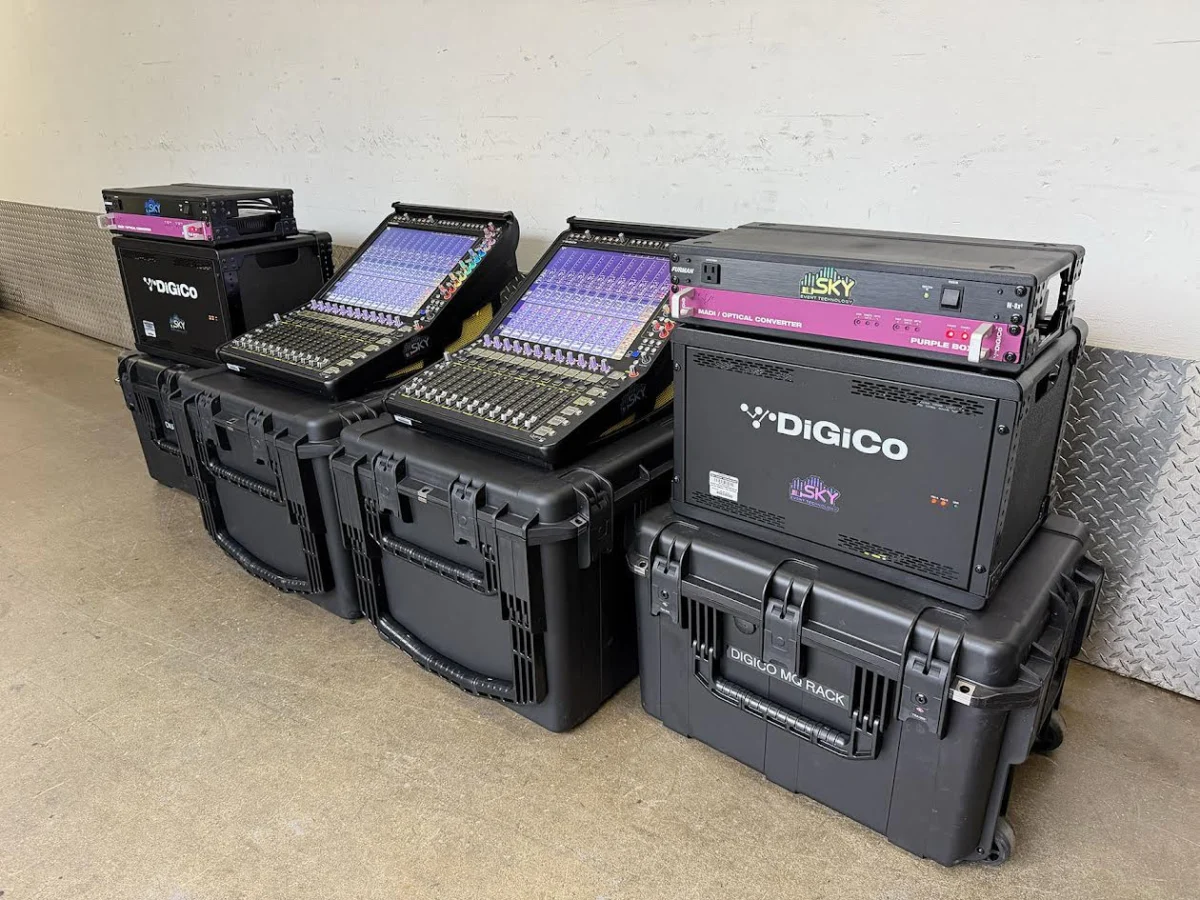
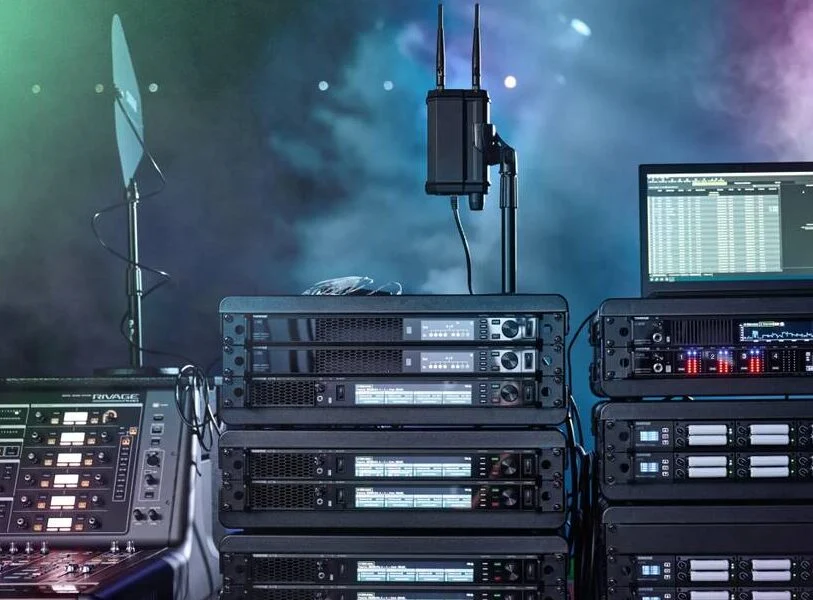
The sheer processing power required to manage this object-based mix was managed by 24 L-Acoustics LA7.16 amplified controllers for the L Series, alongside 18 LA12X units for the peripheral fills. The "brain" of the system consisted of two L-ISA Processor II units, with one functioning as a redundant backup. Audio was distributed via Milan-AVB, with system management orchestrated through two P1 processors and LA Network Manager.
Engineering the Immersive Experience: A Systems Perspective
For Chris Demonbreun, the North American systems engineer, the success of the tour was the result of meticulous planning and the use of L-Acoustics’ proprietary "Soundvision" software.
"The initial design came from Josh Lloyd at Britannia Row Productions," Demonbreun notes. "I made modifications to fit the show’s physical elements and relied heavily on Soundvision’s Autosolvers. They are indispensable tools when deploying the L Series. The algorithms for Autofilters are incredibly robust, allowing us to maintain a consistent sonic signature in every venue, despite the unique acoustic challenges of each arena."
The "Spatial Zone" Strategy
One of the core challenges of arena audio is ensuring that the mix heard in the front row is as balanced as the mix heard at the back. Demonbreun estimates that roughly 75 percent of the audience was seated within the "L-ISA immersive zone," with the remainder covered by supplementary fill systems.
"The L-ISA Processor used the ‘Sound Spaces’ feature to render a tailored immersive environment for the front-fill zone," says Demonbreun. "This delivered a spatially coherent experience to those closest to the stage. Coupled with the fact that we had virtually no stage volume to interfere with the front-fills, the result was a pristine, high-fidelity environment."
The Hardware Advantage: L Series Form Factor
A major contributor to the tour’s aesthetic success was the physical footprint of the L Series. In previous years, traditional line arrays often cluttered the stage rigging, potentially distracting from the elaborate set designs. The L2 and L2D elements changed the game.
"Each L2/L2D element covers the same contour as four conventional K2 elements, but in a package that is 46 percent smaller and 40 percent lighter," Harvey observes. "This allowed the rigging to stay visually clean, leaving the impact of the set design unmarred."
Furthermore, the team utilized the L-Acoustics Clamp 1000, a panning rigging system rated to 1,000 kg. This allowed the engineers to rotate entire arrays from the ground. "It’s a game-changer," adds Demonbreun. "It cuts load-in time significantly and allows us to fine-tune the azimuth angle at ground level, which is critical for L-ISA, where consistent array orientation is essential for a stable immersive image."
Implications for the Future of Live Performance
The Ultrasound World Tour highlights a significant shift in concert production. By integrating object-based mixing with compact, high-efficiency loudspeaker technology, Lorde’s team has demonstrated that "bigger" does not have to mean "less precise."
The use of the Follow-Me tracking system, which locked Lorde’s vocal directly to her physical position on stage, pushed the immersive experience even further. "As she walked around the stage, her voice in the speakers followed her physical presence," Harvey says. "This is the ultimate goal of immersive audio—to remove the barrier between the performer and the audience."
Looking ahead, the success of this tour serves as a blueprint for future arena productions. As audiences become more accustomed to high-fidelity, spatialized audio, the demand for systems that can provide "studio monitor" quality at scale will only grow.
Conclusion: A New Standard
The Ultrasound World Tour is more than just a series of performances; it is a technical triumph. By successfully marrying the high-octane requirements of a pop show with the delicate, nuanced requirements of intimate songwriting, the production team has redefined what is possible in an arena setting.
As Lorde moves into the final leg of her festival dates, the impact of her work with L-Acoustics and Clair Global remains clear: the future of live sound is not just about volume, but about clarity, space, and the emotional connection that only a perfectly rendered mix can provide. Whether in the front row or the back of the arena, the Ultrasound experience ensures that every ticket-holder hears the music exactly as the artist intended—vulnerable, dynamic, and profoundly immersive.