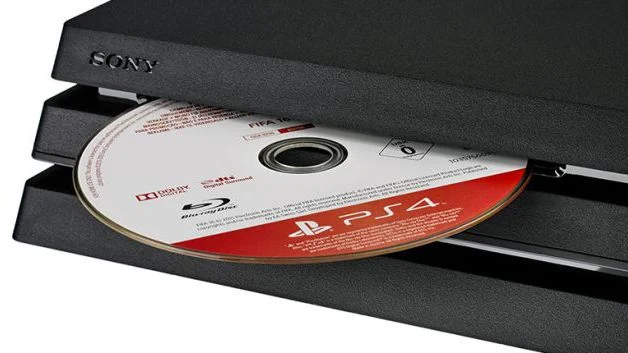
Sony Interactive Entertainment has delivered what many industry analysts consider a watershed moment for the entertainment industry. In an official announcement that has sent shockwaves through the global gaming community, the Japanese technology and gaming giant confirmed that it will cease all physical disc production for new PlayStation games starting in January 2028.
From that point forward, future PlayStation titles will be accessible exclusively via digital formats. While brick-and-mortar retailers will still have a role to play, their inventory will be limited to digital download codes. For the vast majority of players, the PlayStation Store will become the sole destination for acquiring new releases.
This transition marks the end of an era that began in 1994 with the launch of the original PlayStation, a console that helped popularize CD-ROMs over cartridges. Now, more than three decades later, Sony is preparing to dismantle the physical distribution network it helped build, fundamentally altering the relationship between consumers, retailers, and the media they purchase.
1. Main Facts: The Digital-Only Mandate
The core of Sony’s strategy is a complete phase-out of optical disc manufacturing for new software releases. Below are the key parameters of this upcoming transition:
- Effective Date: January 2028. All new first-party and licensed third-party titles releasing after this date will be distributed exclusively through digital channels.
- Legacy Support: Sony has confirmed that this transition will have no retroactive impact. Games released prior to January 2028 will remain available in their existing physical disc formats, and legacy physical libraries will continue to be playable on compatible hardware.
- Retailer Integration: Traditional retailers (such as GameStop, Target, and Best Buy) will not be completely cut out immediately. Instead of stocking physical Blu-ray cases, they will sell physical cards or receipts containing digital download codes.
- The Centralized Storefront: The PlayStation Store will serve as the primary and most direct point of access for all software, solidifying Sony’s role as both the platform holder and the primary distributor.
This announcement represents the most aggressive move by a console manufacturer to date to eliminate physical media, outpacing competitors like Microsoft and Nintendo in setting a hard deadline for the retirement of the disc.
2. Chronology: The Road to an All-Digital Ecosystem
The decision to abandon physical discs is not an overnight pivot; rather, it is the culmination of a decade-long industry shift toward digital distribution.
The Mid-Generation Pivot (2020–2023)
The groundwork for this transition was laid during the launch of the ninth console generation. In November 2020, Sony launched the PlayStation 5 in two configurations: a standard model with an Ultra HD Blu-ray drive and a Digital Edition priced $100 cheaper. This hardware strategy forced consumers to choose between the flexibility of physical media and a lower entry price. Microsoft followed a similar strategy with the Xbox Series X and the disc-less Xbox Series S.
By late 2023, Sony introduced a refreshed "Slim" model of the PlayStation 5, featuring a detachable disc drive. This modular design signaled to analysts that Sony was preparing for a future where disc drives were optional accessories rather than core components of console hardware.
The Catalyst: High-Profile Digital-Only Releases (2024–2025)
The industry’s confidence in digital-only distribution grew as major publishers began bypassing physical releases for high-profile games. Titles like Alan Wake 2 proved that AAA games could succeed without a physical release.
This trend culminated in the announcement that the highly anticipated Grand Theft Auto VI—projected to be one of the largest entertainment launches in history—would be available exclusively in digital formats on the PlayStation 5 and Xbox Series X/S platforms. This move proved that the industry’s most lucrative franchises no longer deemed physical manufacturing necessary to achieve record-breaking sales.
The Studio Canal Incident: A Crisis of Digital Ownership (Recent Events)
Just three days prior to announcing the 2028 digital mandate, Sony found itself at the center of a major public relations crisis regarding digital storefront rights. Due to an expiring content licensing agreement with Studio Canal, Sony announced that UK customers would lose access to more than 500 purchased movies and television shows from their PlayStation Store libraries.
Crucially, Sony confirmed that these titles would be permanently deleted from users’ video libraries with no offer of refunds or financial compensation. This incident served as a stark, immediate reminder of the fragile nature of digital "ownership" and amplified the backlash to the subsequent announcement of the 2028 physical disc phase-out.
3. Supporting Data: The Economics of the Digital Shift
Sony’s decision is heavily supported by financial data, which shows a clear consumer preference for digital convenience over physical ownership, alongside the financial benefits of digital distribution for publishers.
The Rise of Digital Software Sales
According to recent financial reports from Sony Interactive Entertainment and other major publishers like Electronic Arts, Capcom, and Ubisoft, digital sales now account for approximately 70% to 90% of all software units sold globally.
| Metric | Physical Distribution | Digital Distribution |
|---|---|---|
| Average Profit Margin | ~50% – 60% (due to manufacturing, shipping, and retail cuts) | ~70% – 85% (direct-to-consumer via platform store) |
| Retail Shelf Space | Declining (major retailers reducing physical media space) | Infinite shelf life, instantly accessible worldwide |
| Secondary Market Impact | Subject to used game sales (no revenue for publishers) | Zero impact (licenses are non-transferable) |
The Collapse of Physical Retail
The broader retail landscape has also shifted away from physical media. In 2024, major US retailer Best Buy completely phased out the sale of physical DVDs and Blu-rays, while Target and Walmart significantly reduced their in-store physical media sections. The decline of physical retail space has made maintaining a physical supply chain increasingly expensive and inefficient for publishers.
Public Backlash in Numbers
Despite the industry’s financial incentive to go digital, consumer sentiment remains highly protective of physical media. Within 24 hours of Sony’s announcement on the official PlayStation Blog, the post accumulated over 6,250 comments, with an overwhelming majority expressing anger and disappointment. This negative response highlights a major disconnect between consumer purchasing habits (which favor digital convenience) and consumer sentiment (which values the option of physical ownership).
4. Official Responses: Corporate Strategy vs. Consumer Outcry
The discourse surrounding the announcement reveals two very different perspectives on the future of gaming.
Sony’s Rationale
In the official PlayStation Blog post, Sony Interactive Entertainment framed the decision as a customer-focused move designed to align with modern user behavior:
"This is a natural direction for Sony Interactive Entertainment to adapt to consumer trends, as the general preference for digital media significantly outpaces physical discs. This transition will enable us to align more closely with how most of our community prefers to access and play games today."
From a corporate standpoint, eliminating physical discs simplifies logistics, lowers environmental impact, and removes the secondary market for used games, ensuring that every copy played is purchased directly from authorized channels.
The Voice of the Community
The reaction from the gaming public has been largely critical, with many pointing to the recent Studio Canal incident as proof of the risks of an all-digital future. On public forums and the PlayStation Blog, users expressed frustration over the loss of consumer choice:
- "Do not like this, I’ve always preferred physical to digital," wrote one user, emphasizing the tactile experience of collecting.
- "We literally own nothing now but licenses; this is a horrible decision, Sony," another user commented, highlighting the legal distinction between buying a physical copy and purchasing a digital license.
- Others were more direct in their criticism of the platform holder, demanding that Sony "revert this decision right now."
5. Implications: The Future of Gaming, Preservation, and Home Cinema
Sony’s decision to phase out physical discs by 2028 has major implications that extend far beyond simply changing how games are purchased.
The Preservation Crisis
One of the most significant concerns raised by historians and game preservationists is the long-term survival of digital-only titles. When a game is tied entirely to a digital storefront, its existence is dependent on the platform holder keeping the servers online.
If Sony chooses to shut down the PlayStation Store for a legacy console—as it attempted to do with the PlayStation 3 and PlayStation Vita stores in 2021—hundreds of digital-only games could disappear forever. Physical discs, by contrast, can be preserved, archived, and played offline long after official server support has ended.
The Digital Monopoly and Pricing
In a purely digital ecosystem, Sony holds a monopoly over the distribution of software on its platform. Currently, consumers can shop around for physical games, taking advantage of discounts at various retailers or buying used copies at lower prices.
Without physical competition, Sony gains complete control over software pricing on the PlayStation Store. This raises concerns that digital games may remain at their launch prices (such as $70/£70) for much longer, with consumers having no alternative way to purchase them.
Hardware Evolution: Anticipating the PlayStation 6
While Sony has not officially announced its next-generation console, industry analysts expect the PlayStation 6 to be revealed within the next few years. Given the January 2028 timeline for ending disc production, it is highly likely that the PlayStation 6 will be designed as a digital-only console, without any optical disc drive option.
[PlayStation 5 (Standard)] ---> [PS5 Slim (Detachable Drive)] ---> [PlayStation 6 (Digital-Only)]
     (Built-in Disc Drive)              (Optional Accessory)               (No Optical Drive Support)
The Impact on the 4K Blu-ray Format
The removal of the disc drive from future PlayStation consoles also poses a threat to the home cinema market. For many consumers, the PlayStation 5 and Xbox Series X serve as their primary 4K Ultra HD Blu-ray players.
If future consoles drop optical drives entirely, the consumer base for physical 4K movies will shrink significantly. This could lead to a decline in 4K Blu-ray production, impacting home cinema enthusiasts who rely on physical discs for high-bitrate video and uncompressed audio formats like Dolby Atmos and DTS:X.
Conclusion
Sony’s plan to end physical disc production by 2028 represents a major shift toward a fully digital entertainment landscape. While this move offers increased efficiency for publishers and convenience for many consumers, it also raises important questions about digital ownership, long-term game preservation, and consumer rights. As the industry approaches the 2028 deadline, both gamers and the wider tech industry will have to adapt to a new era where digital licensing replaces physical ownership.