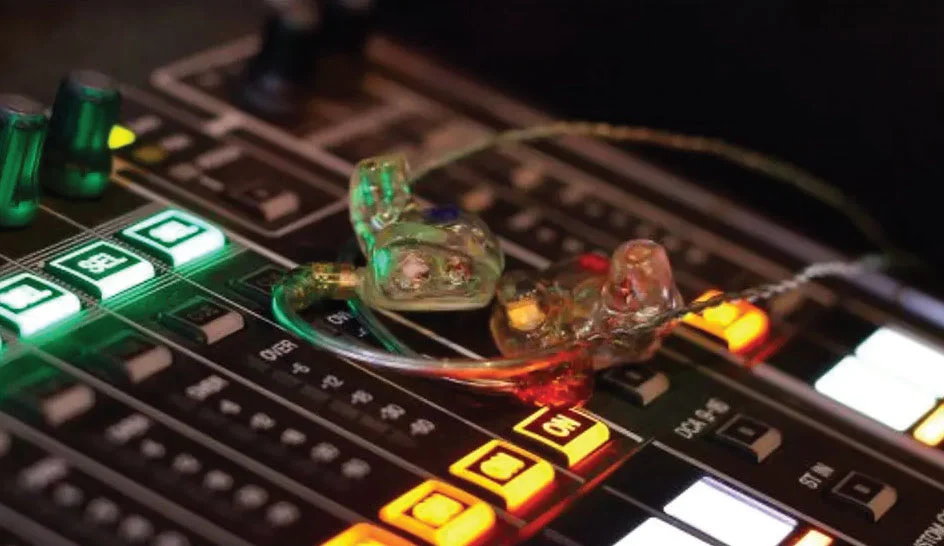
In the modern era of professional live sound, the industry has undergone a quiet, yet seismic, shift. In-Ear Monitors (IEMs) have become the industry standard for touring acts, houses of worship, and large-scale festivals. They offer a pristine, isolated listening environment, reduced stage noise, and a level of consistency that was once considered a holy grail for monitor engineers.
However, as the pendulum swings toward total adoption of in-ear technology, a critical question emerges: Have we traded musicality for convenience? While IEMs offer undeniable technical advantages, there remains a nuanced, sophisticated argument for the continued use of traditional stage wedges and side fills. For the discerning sound engineer, the goal is not to force every artist into an ear-mold, but to understand when the "old school" approach provides a superior artistic outcome.
The Case for IEMs: A Brief Technological Context
To understand why some artists might resist the transition to IEMs, one must first acknowledge why the industry pushed for them in the first place. The benefits are significant and well-documented. By removing high-volume floor monitors, engineers can achieve a cleaner "front-of-house" mix, as there is less "bleed" from stage speakers into the vocal microphones.
Furthermore, IEMs offer a controlled stereo image, superior timing references, and the ability for performers to hear click tracks and backing sequences with surgical precision. For a pop act running complex, time-coded synchronization, IEMs are not just an upgrade; they are a necessity. Yet, for the artist whose performance relies on spontaneity, acoustic interaction, and the visceral feel of the room, the isolation of an IEM system can sometimes feel like a sensory deprivation chamber.
The Jazz Paradigm: The Art of the "Self-Mix"
The most prominent example of where IEMs often fail is the traditional jazz ensemble. In a quartet setting, musicians rely on the subtle, non-verbal cues of their bandmates. They feed off the breath of the saxophonist, the physical strike of the drummer’s snare, and the room’s natural acoustics.
When an engineer forces a jazz trio onto IEMs, they effectively sever these invisible threads of communication. The result is often a sterile, detached performance. Jazz musicians are masters of "self-mixing." They position themselves on stage with deliberate intent, balancing their acoustic volume relative to their bandmates’ proximity. By utilizing traditional wedges, a monitor engineer can provide a light, supplementary reinforcement that fills in the gaps without overriding the natural, organic interaction of the performers. In this context, the wedge is not a loudspeaker; it is a discreet, invisible helper that respects the band’s spatial awareness.
Classical Intonation and the Vexing Problem of Latency
Perhaps the most technical argument against the universal application of IEMs lies in the world of classical and acoustic music. Performers of orchestral or high-end acoustic instruments possess an extraordinary sensitivity to the relationship between their physical exertion and the sound it produces.
The Latency Barrier
In the digital age, even the most efficient signal chains introduce some degree of latency—the delay between the vibration of a string and the sound hitting the ear. For a violinist or a vocalist, this micro-second delay can be profoundly disorienting. They rely on the "bone conduction" of their instrument—the vibration they feel in their own body—to maintain perfect intonation and timing. When an IEM system introduces a tiny, millisecond delay, the brain perceives a conflict between the vibration in the jawbone and the sound in the ear, often leading to pitch inaccuracies and fatigue.
The "Virtual Room" Solution
For these artists, the monitor engineer’s role is to recreate the environment they expect. On large, open-air stages, this can be achieved through a strategic deployment of wedges. By placing speakers in a three-sided configuration—left, right, and front—and adding carefully tailored room reverb, the engineer can simulate the reflective characteristics of a concert hall. This gives the artist the sense of playing within a space, rather than inside a vacuum, allowing them to maintain the dynamic control and frequency sensitivity required for their craft.
Chronology of an Evolving Philosophy
The trajectory of stage monitoring has evolved in three distinct phases:
- The Wedge Era (1960s–1990s): Dominated by massive side-fills and floor monitors. The aesthetic was about "power" and "feel," often at the expense of hearing health and FOH clarity.
- The Transition (2000s–2010s): The rise of digital consoles and affordable wireless IEMs. This period saw the industry aggressively push for "clean stages," often ignoring the subjective experience of the artist.
- The Holistic Era (Present Day): The current shift toward a balanced approach. Engineers are increasingly realizing that "better" isn’t a technical metric—it is a performance metric. If the artist is uncomfortable, the show is failing, regardless of how clean the frequency response is.
The Common Thread: Context is King
The underlying principle that connects these disparate examples is the concept of "acoustical connection." Whether it is a solo singer in a cathedral-like venue or an instrumentalist who uses the room as an extension of their instrument, the task of the engineer is to reinforce, not replace.
If an artist is hesitant about switching to IEMs, it is rarely due to a fear of technology. Often, it is a fear of losing their connection to their environment. A skilled monitor engineer will assess the room first. Is it a "live" room with natural, pleasing decay? If so, the monitors should be used sparingly. Is it a dead, carpeted ballroom? Then the wedges might need to provide that missing "air" and reflection.
Implications for the Industry
The shift toward a more thoughtful, hybrid approach to monitoring has significant implications for how we train the next generation of audio engineers.
1. The Death of the "One-Size-Fits-All" Mindset
Training programs must move beyond teaching signal flow to teaching psychology and acoustics. An engineer needs to be part-technician, part-diplomat. Understanding why an artist might prefer a wedge over an IEM—and having the tools to make that wedge sound exceptional—is a high-level skill that separates a button-pusher from a master engineer.
2. The Rise of the "Transition Specialist"
As mentioned by industry experts, the transition from wedges to IEMs is not an overnight process. It requires a slow, iterative approach. Providing "hybrid" setups—where an artist might have an IEM for their click/backing tracks but a wedge for their primary instrument—can be the bridge that helps artists retain their comfort while gaining the benefits of modern technology.
3. Sustainability and Health
While the preservation of hearing is a primary driver for IEM adoption, the industry must also account for the psychological impact of isolation. The "Live Sound Summit" and similar professional forums are beginning to emphasize that comfort is the foundation of energy transfer. If an artist feels disconnected, that energy does not reach the audience. Therefore, the choice of monitoring is, ultimately, a choice about the quality of the audience’s experience.
Conclusion: Putting the Artist at the Center
At the end of the day, the monitor engineer is a facilitator of creativity. If the objective is to maximize the performance, then the technology must serve the performer, not the other way around.
While the convenience of IEMs is undeniable, we must avoid the trap of technological dogma. There is a profound elegance in knowing when to put the digital tools aside and rely on the physics of a well-placed loudspeaker. By observing the artist’s relationship with their environment, acknowledging the nuances of their genre, and respecting their need for physical and sonic connection, we can create monitoring environments that truly serve the art.
The goal is not to be "up to date" with the latest gear; the goal is to be "up to the task" of supporting the musician. Whether that comes through a high-fidelity ear mold or a carefully tuned floor wedge, the measure of success remains the same: the artist’s comfort and the resulting magic that flows from the stage to the audience.