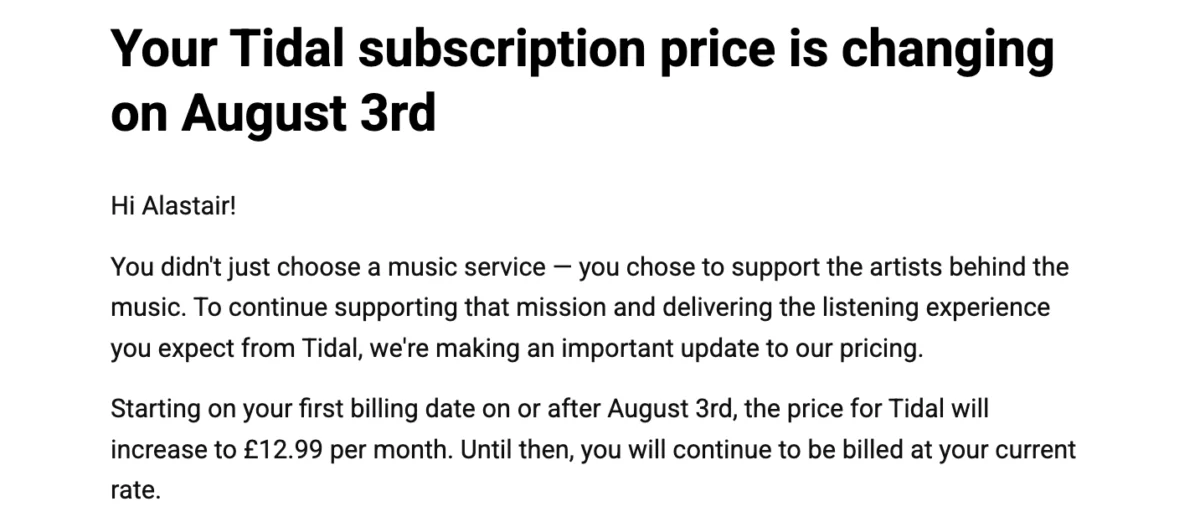
In an era defined by persistent macroeconomic pressures and shifting dynamics within the digital entertainment sector, subscription price increases have become an almost monthly occurrence for consumers. The latest company to adjust its pricing structure is Tidal, the high-fidelity music streaming service.
Tidal has begun notifying its global subscriber base via email that subscription fees will increase starting in August. This move follows similar price adjustments across the music streaming market, signaling an industry-wide reassessment of the valuation of digital music rights, high-resolution audio delivery, and artist compensation models.
1. Main Facts: The Details of Tidal’s Price Adjustment
Tidal’s pricing update represents a direct increase to its standard monthly subscription rate. According to official correspondence sent to active subscribers, the price adjustment will take effect on each user’s first billing date on or after August 3rd.
The price hikes vary by region, representing an average increase of approximately 9% to 23% depending on the territory:
- United Kingdom: The monthly subscription rate will increase from £10.99 to £12.99, a £2.00 (18.2%) monthly increase.
- United States: The rate will rise from $10.99 to $11.99 per month, a $1.00 (9.1%) increase.
- Australia: Subscribers will see their monthly bills rise from AU$12.99 to AU$15.99, an increase of AU$3.00 (23.1%).
For prospective subscribers, the updated pricing model is already live on Tidal’s website. New users can still access a 30-day free trial before being transitioned to the new regional billing rates.
2. Chronology: The Evolution of Tidal’s Pricing and Tier Structure
To understand the context of this price hike, it is necessary to examine Tidal’s historical positioning within the music streaming market. The service has undergone several structural changes since its high-profile acquisition and relaunch by artist-led consortiums in 2015.
[2015] Tidal Launches: Introduces $9.99 Premium (lossy) and $19.99 HiFi (lossless) tiers.
  │
  ▼
[2021] Competition Shifts: Apple & Amazon bundle lossless audio into standard plans at no extra cost.
  │
  ▼
[April 2024] Plan Consolidation: Tidal scraps the $19.99 HiFi Plus tier, offering Hi-Res FLAC for $10.99.
  │
  ▼
[August 2024] Price Adjustment: Base tier price increases to $11.99 / £12.99 / AU$15.99.
The Era of the Premium High-Fi Tier (2015–2024)
For nearly a decade, Tidal positioned itself as a premium service tailored specifically to audiophiles. It maintained a two-tier pricing system:
- Tidal Premium: A standard lossy streaming plan priced at $9.99 / £9.99 per month, matching the industry standard set by Spotify.
- Tidal HiFi / HiFi Plus: A high-resolution tier priced at $19.99 / £19.99 per month. This tier offered lossless CD-quality audio and eventually expanded to include Master Quality Authenticated (MQA) audio, Dolby Atmos, and Sony 360 Reality Audio.
The Competitive Disruption of 2021
In 2021, Apple Music and Amazon Music disrupted the high-fidelity market by offering lossless and spatial audio to all standard subscribers at no additional charge ($9.99/month at the time). This left Tidal and Qobuz as the only services charging a significant premium for high-resolution audio.
The Streamlining Era (April 2024)
In response to market pressures, Tidal executed a major restructuring of its subscription tiers in April 2024. The service scrapped its multi-tier system entirely. It dissolved the $19.99 "HiFi Plus" tier and consolidated all of its high-resolution offerings—including 24-bit, 192kHz Hi-Res FLAC and Dolby Atmos—into a single, streamlined base plan priced at $10.99 / £10.99 per month.
This move was widely praised by the audiophile community, as it effectively slashed the price of Tidal’s top-tier audio quality by nearly 45%.
The August Price Adjustment
Only months after lowering the cost of entry for high-resolution audio, Tidal has implemented its first base plan price adjustment in three years, raising the consolidated standard tier to $11.99 / £12.99 / AU$15.99.
3. Supporting Data: Comparative Market Analysis
The new pricing structure alters Tidal’s value proposition relative to its key competitors. Below is a comparative overview of the current music streaming landscape, detailing monthly costs and audio quality limits:
| Streaming Service | US Monthly Price | UK Monthly Price | Maximum Audio Quality | Spatial Audio Included? |
|---|---|---|---|---|
| Apple Music | $10.99 | £10.99 | Lossless ALAC (Up to 24-bit/192kHz) | Yes (Dolby Atmos) |
| Amazon Music Unlimited | $10.99 ($9.99 for Prime) | £11.99 (£10.99 for Prime) | Lossless FLAC (Up to 24-bit/192kHz) | Yes (Dolby Atmos / 360 Reality Audio) |
| Deezer Premium | $11.99 | £11.99 | Lossless FLAC (16-bit/44.1kHz CD Quality) | No |
| Spotify Premium | $11.99 | £11.99 | Compressed Ogg Vorbis (320kbps) | No |
| Tidal (New Price) | $11.99 | £12.99 | Lossless FLAC (Up to 24-bit/192kHz) | Yes (Dolby Atmos) |
| Qobuz Studio | $12.99 | £12.99 | Lossless FLAC (Up to 24-bit/192kHz) | No |
Key Takeaways from the Data:
- The Value Leader: Apple Music remains the most cost-effective option for high-resolution audio, offering its full lossless library and Dolby Atmos integration for £10.99 / $10.99 per month.
- The Lossy Disadvantage: Spotify Premium costs the same as Tidal in the US ($11.99) and is slightly cheaper in the UK (£11.99), yet it remains the only major streaming service that does not offer lossless audio streaming.
- Direct Alignment: Tidal’s new UK pricing (£12.99) aligns it directly with Qobuz, cementing both platforms as premium-tier options for high-fidelity enthusiasts, while its US pricing ($11.99) keeps it on par with Spotify and Deezer.
4. Official Responses and Industry Context
In the email sent to active subscribers, Tidal provided the following justification for the price adjustment:
"This is the first time we’ve adjusted our base plan pricing in three years. The change goes toward fairly supporting the artists and rightsholders behind the music you love, and continuing to build a better experience for you."
The "Artist Support" Narrative
Tidal has long marketed itself as an artist-first platform. When the service was acquired by Project Panther Bidco (a company controlled by Shawn "Jay-Z" Carter) in 2015, it was backed by major artists including Beyoncé, Kanye West, Daft Punk, and Arcade Fire, who promised higher royalty payouts for creators.
While Tidal historically offered a higher per-stream payout rate than Spotify, its financial model has faced scrutiny. The consolidation of plans in April 2024 resulted in the discontinuation of Tidal’s "Direct-to-Artist" payouts—a program that previously directed 10% of a HiFi Plus subscriber’s fee directly to their most-streamed artist. Consequently, the claim that this price hike will "fairly support artists" is viewed by some industry analysts as a necessary adjustment to satisfy licensing demands from major record labels (Universal Music Group, Sony Music Entertainment, and Warner Music Group) rather than a direct raise for independent creators.
Macroeconomic Pressures on Streaming
The music streaming industry is facing intense pressure from rightsholders to increase the Average Revenue Per User (ARPU). Record label executives have argued that music streaming prices have remained stagnant for too long, failing to keep pace with inflation since the launch of Spotify over a decade ago.
This pressure has forced the entire industry’s hand. Over the past 18 months, Apple Music, Amazon Music, YouTube Music, Deezer, Spotify, and now Tidal have all raised their baseline subscription prices to satisfy the licensing demands of the major music groups.
5. Implications: What This Means for the Streaming Market
Tidal’s decision to raise prices carries several strategic implications for the company and the broader digital music ecosystem.
Subscriber Retention and Platform Loyalty
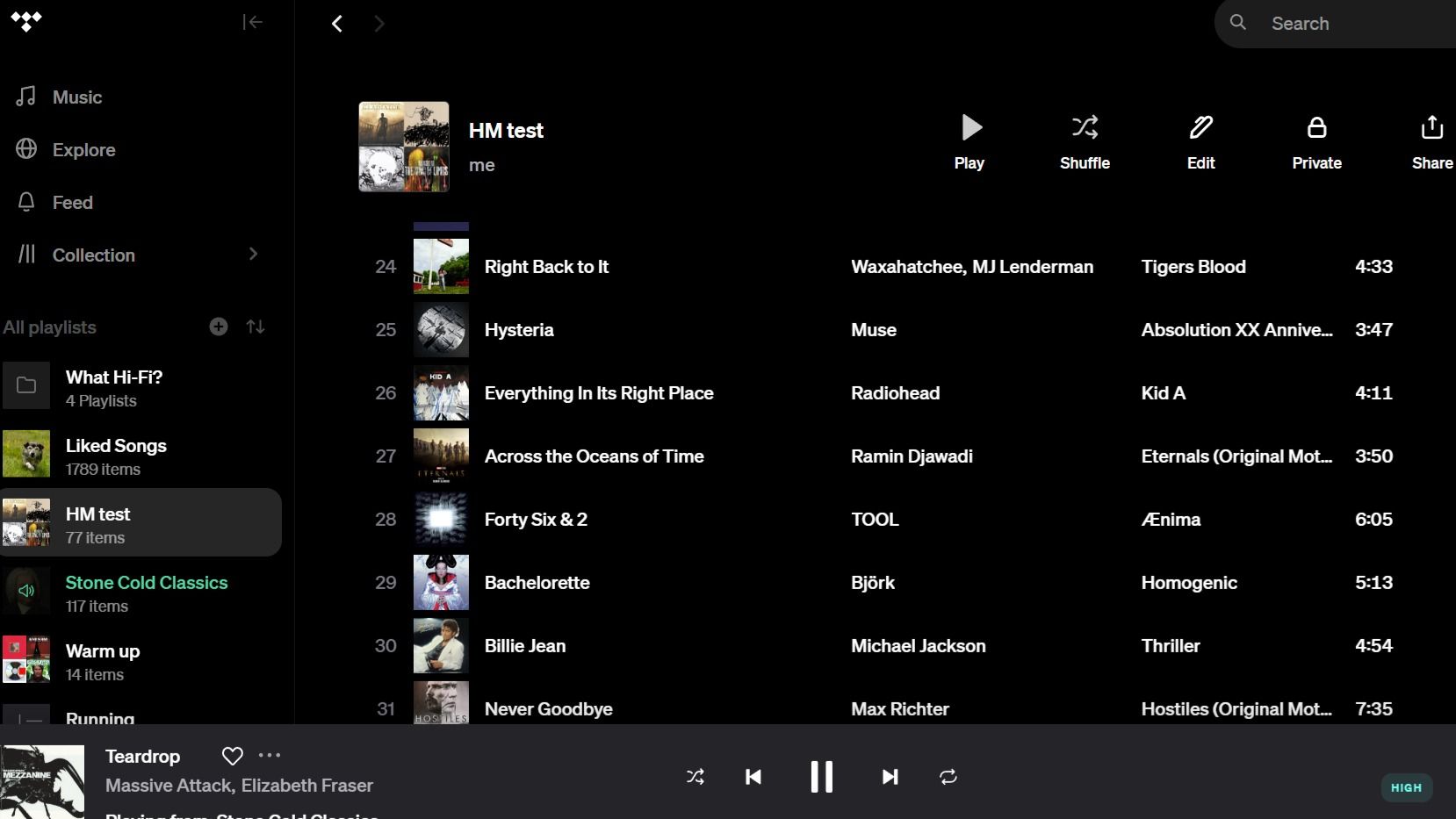
For audiophiles, Tidal’s primary selling points are its sound quality, clean user interface, robust integration with high-end hi-fi hardware (via Tidal Connect and Roon), and its expansive catalog of high-resolution FLAC files.
However, because Apple Music and Amazon Music offer comparable audio resolutions at a lower monthly cost, Tidal risk losing cost-conscious subscribers. Tidal’s survival depends on its ability to offer a superior user experience, better music discovery algorithms, and deeper integration with dedicated audio hardware than its larger, tech-giant competitors.
Streamlining Operations
The price hike comes amid rumors of operational tightening at Tidal. The platform recently announced that it is ending support for its dedicated app on Samsung Smart TVs, indicating a shift away from maintaining niche smart-home applications to focus on core mobile, desktop, and dedicated hi-fi integrations.
The Impact on Spotify’s "HiFi" Strategy
Spotify has promised a lossless audio tier (initially dubbed "Spotify HiFi" and later rumored as "Supremium") for over three years. As competitors raise their base prices to $11.99 / £11.99 and above, Spotify may find the market conditions favorable to finally launch its high-resolution tier. By establishing a higher price ceiling across the industry, Tidal and Qobuz have paved the way for Spotify to introduce a premium audiophile tier at a higher price point without facing consumer backlash.
Ultimately, Tidal’s price adjustment confirms that the era of cheap, undifferentiated music streaming has ended. As platforms search for profitability and rightsholders demand higher returns, consumers must decide whether the unique features of premium platforms like Tidal justify the growing monthly cost of digital music.