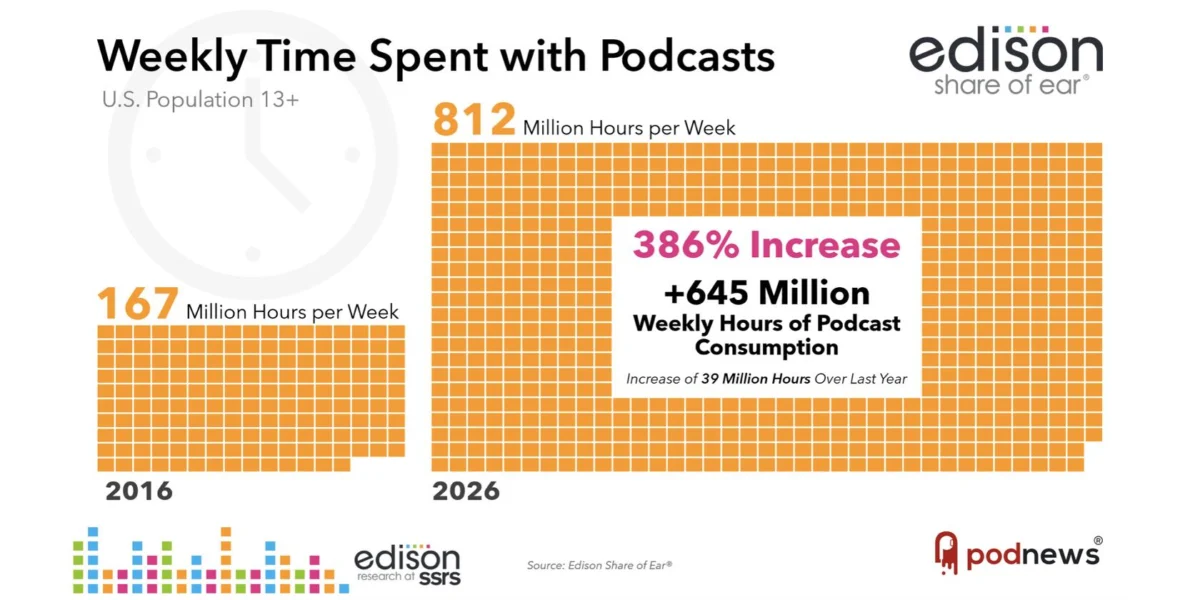
The global podcasting industry is currently experiencing a period of profound consolidation and professionalization. Recent data from Edison Research reveals a staggering statistic: Americans are now consuming 812 million hours of podcast content every single week. This figure not only underscores the medium’s resilience in a crowded media landscape but also highlights the shifting economic reality for creators, distributors, and the ancillary industries that support them.
As podcasting moves from a hobbyist-driven medium to a sophisticated pillar of the digital advertising economy, the stakes for creators have never been higher. From the necessity of protecting business assets to the emergence of high-budget corporate and creative productions, the industry is entering a new chapter.
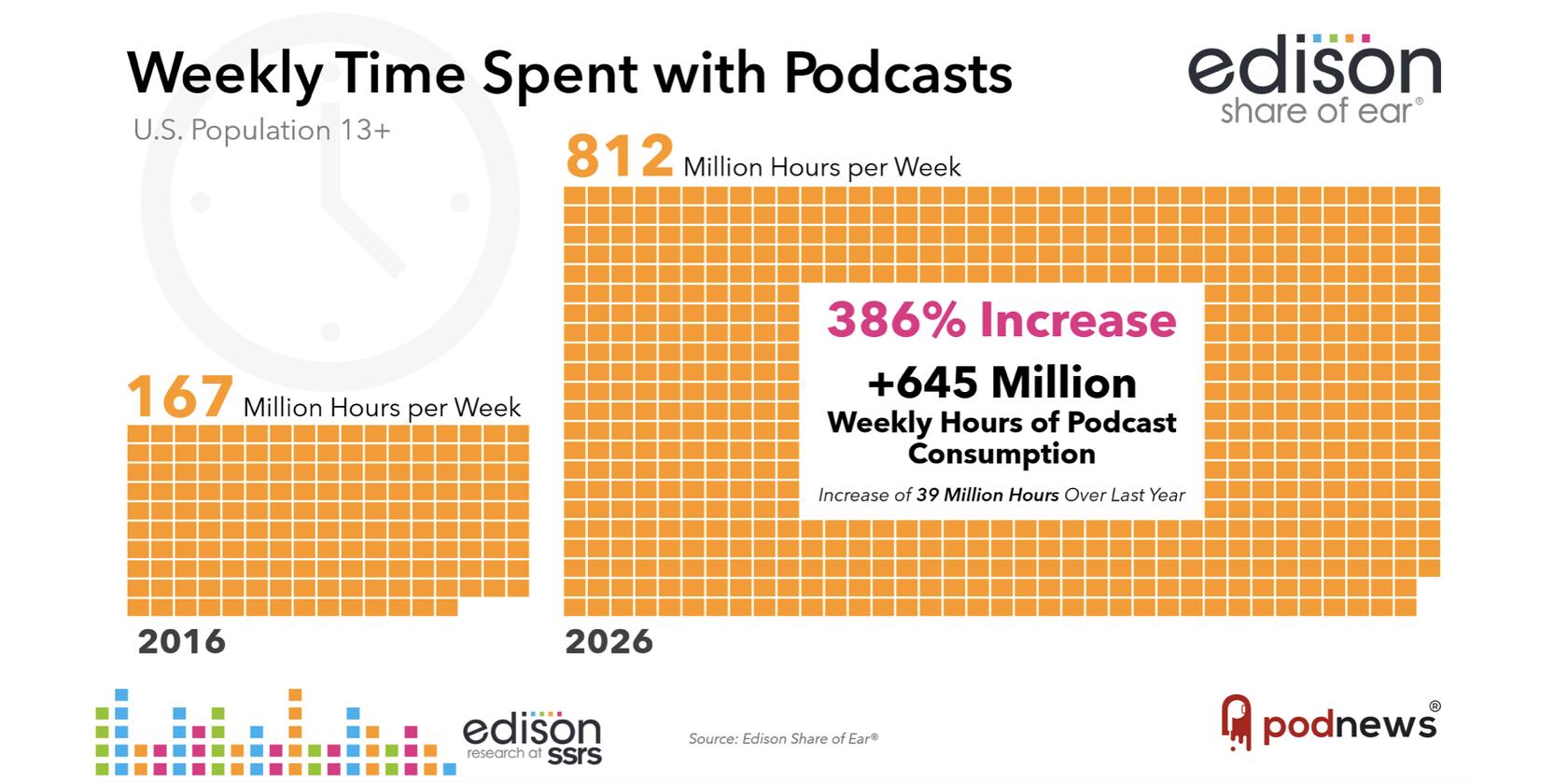
The Economics of Consumption: By the Numbers
The 812 million weekly hours reported by Edison Research serve as a benchmark for the medium’s maturation. This consumption is no longer driven solely by casual listening; it is fueled by a robust ecosystem of daily news, serialized storytelling, and niche interest programming that commands high levels of listener loyalty.
Top Performers and Market Leaders
Current market data illustrates the concentration of power within the industry:

- The Daily: Consistently remains the #1 podcast on Apple Podcasts in the United States, proving the enduring power of high-production, daily news formats.
- The Joe Rogan Experience: Continues to dominate the Spotify ecosystem in the U.S., highlighting the efficacy of platform-exclusive distribution and the power of massive, established listener bases.
- Global Trends: Data from international markets shows significant momentum in specific genres. For instance, in Ireland, Haunted City – A Blades in the Dark Campaign has seen significant growth, while new entries like What’s on Your Riste? are rapidly capturing hobbyist audiences. In Australia, The Great Simplification with Nate Hagens remains a leader in Earth Sciences, demonstrating the intellectual depth that listeners increasingly seek from the medium.
Risk Management: The "No Gear, No Gig" Reality
As the podcasting industry grows, so too does the need for professionalization. One of the most common pitfalls for independent creators is a misunderstanding of risk management, specifically regarding equipment insurance.
Many podcasters operate out of home studios, leading to a dangerous assumption: that their high-end microphones, interfaces, and computer setups are covered under standard homeowner’s insurance policies. This is rarely the case.

The Business Equipment Trap
When a studio is used to generate income—whether through sponsorships, affiliate revenue, or listener-supported models—the equipment used to create that content is classified as "business equipment." In the event of a fire, theft, or accidental damage, standard homeowner policies almost universally exclude these assets from claims.
"It is a common oversight that can prove devastating to a creator’s career," says Laura Donelan of MusicPro Insurance. "When you rely on your gear for your livelihood, you are effectively running a small business. If your equipment isn’t specifically insured for commercial use, you are essentially operating without a safety net."

Why Specialized Coverage Matters
MusicPro, a firm with over two decades of experience and backed by ASCAP and Sterling Risk, emphasizes the need for "white glove" protection. Because standard insurers often lack the nuance to understand the specific risks associated with AV and audio equipment, specialized providers offer coverage that accounts for the portability of gear and the specific vulnerabilities of high-end studio technology.
For creators looking to mitigate risk, the process is straightforward:

- Inventory Assessment: Document all assets, including serial numbers and current market values.
- Policy Audit: Review current home policies to confirm the presence (or absence) of business equipment riders.
- Professional Consultation: Contact industry-specific insurers like MusicPro to bridge the coverage gap.
Content Trends: The Rise of Curated, Immersive Audio
The current wave of new content suggests that the "gold rush" phase of podcasting—where quantity was prioritized over quality—is giving way to an era of high-fidelity, highly curated productions.
The Return of the Immersive
Projects like abandoned: The All-American Ruins Podcast represent a shift toward immersive, sound-rich storytelling. By blending history, economics, and environmental commentary, creators are moving beyond the "two people talking into a microphone" format. This trend forces creators to invest in better sound design, location recording, and scriptwriting, which further emphasizes the need for the professional-grade gear mentioned previously.

Corporate Media as a Growth Engine
The launch of A Different Take, hosted by Linda Boff (President of the Forbes CMO Network), signifies a trend where major media brands are leveraging podcasting to provide deep-dive educational content. By positioning podcasts as a tool for "marketing, media, and culture," these organizations are successfully moving beyond traditional advertising into the realm of thought leadership.
Cultural Lens and Identity
New entries such as gay-i from Bubbler Media and iHeartPodcasts demonstrate that networks are actively seeking to serve specific, underserved demographics. By analyzing media through a distinct LGBTQ+ lens, these shows prove that niche-focused content can command significant influence and attract dedicated advertising spend.

Chronology of Industry Shifts
- Early 2000s: Podcasting emerges as an experimental medium for hobbyists and early adopters.
- 2014-2018: The "Serial Era" validates the medium as a viable platform for high-quality storytelling and investigative journalism.
- 2019-2022: Massive venture capital and network investment lead to a proliferation of shows; the industry becomes a primary target for talent acquisitions.
- 2023-2026: A period of "Right-Sizing." The industry moves toward sustainable growth, with a focus on listener retention, high-value production, and the professionalization of the creator’s business infrastructure.
The Implications for Future Creators
The data suggests three clear takeaways for anyone looking to enter or advance in the podcasting space:
- Production Quality is Non-Negotiable: With listeners choosing from millions of hours of content, technical production quality—from sound design to editing—is a major differentiator. Investing in professional equipment is no longer just a luxury; it is a competitive necessity.
- Risk Mitigation is Part of the Business Plan: No creator should launch a show without considering the insurance and liability aspects of their equipment. Protecting the "means of production" is the first step toward building a sustainable media business.
- Community-Driven Niche Content Wins: The success of shows like Tales From The Æther shows that audiences are gravitating toward serialized, high-concept narratives. The "broad appeal" strategy is being replaced by the "deep connection" strategy.
As we look toward the remainder of the year, the podcasting industry appears to be moving toward a more stable, mature ecosystem. While the barrier to entry remains low, the barrier to success is rising. Creators who treat their podcasts as professional businesses—managing their equipment risks, investing in high-quality storytelling, and identifying specific, underserved audiences—will be the ones who define the next era of audio.

For those currently operating in the space, the message is clear: protect your gear, refine your craft, and understand the data. In a market where 812 million hours are consumed weekly, the opportunity for growth is immense, provided you are prepared for the realities of the business.