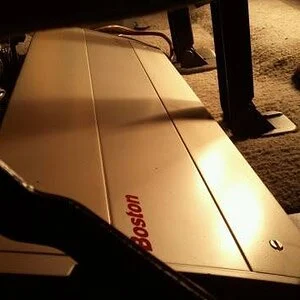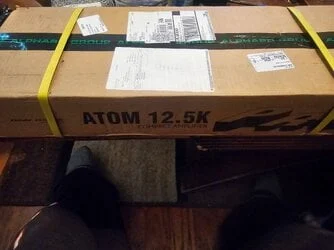
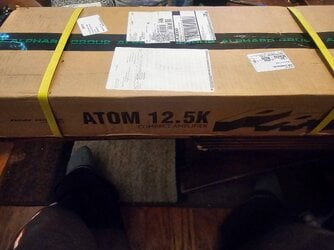
In the high-decibel world of competitive car audio, the pursuit of "headroom" often leads enthusiasts to push the boundaries of electrical engineering. A recent technical inquiry within the community has highlighted the complex interplay between massive amplifier output and high-performance subwoofer thermal capacity. The debate centers on a user attempting to drive four Soundqubed HDX4 18-inch subwoofers using a Deaf Bonce (Apocalypse) Atom 12.5k amplifier at a 0.5-ohm load.
While the setup promises ground-shaking performance, industry experts warn that the margin for error in such a configuration is razor-thin. This article examines the technical implications, the risks of impedance instability, and the best practices for managing extreme power levels in mobile audio environments.
The Core Technical Inquiry
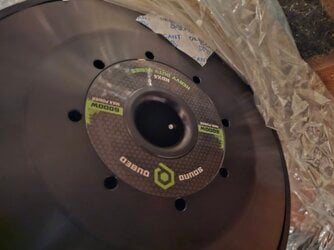
The scenario involves four Soundqubed HDX4 18-inch subwoofers, each featuring dual 1-ohm voice coils. These drivers are engineered for high excursion and robust handling, with a rated RMS of 2,000 watts and a peak power capacity of 6,000 watts. When combined, the user intends to power these with the Deaf Bonce Atom 12.5k, a powerhouse amplifier known for its compact footprint and high-efficiency class-D topology.
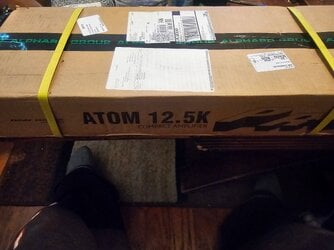
The critical point of contention is the decision to run the amplifier at a 0.5-ohm impedance. In the world of car audio, dropping to 0.5 ohms is often seen as the "holy grail" of power extraction, but it places immense strain on both the amplifier’s output stage and the subwoofer’s voice coils.
Chronology of the Technical Debate
The inquiry, initiated by community member "Stylesinc2309" on June 16, 2026, sparked an immediate discussion among veteran installers and enthusiasts.
- Initial Inquiry (16:15): The user sought validation for a 0.5-ohm wiring configuration, specifically asking if the setup could be run "without issues."
- Expert Analysis (16:30): Representing the community editorial team, "Hal" provided a detailed technical breakdown, emphasizing that while the equipment is high-end, the thermal and electrical risks associated with 0.5-ohm operation on a 12.5k amplifier are significant.
- Community Consensus: Following the post, a wave of feedback from the community reinforced the necessity of advanced electrical support, specifically mentioning the need for high-amperage lithium battery banks and oversized cabling.
Supporting Data: The Physics of Impedance
To understand why this setup is controversial, one must look at the relationship between power, resistance, and heat. The Deaf Bonce Atom 12.5k is designed to provide massive current at low impedances. However, when an amplifier is pushed to its absolute limits, its internal resistance decreases, and the power output surges.
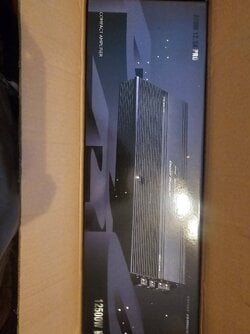
The Impedance Matching Dilemma
With four subwoofers each possessing dual 1-ohm coils, there are multiple wiring configurations possible. To achieve a final 0.5-ohm load, the installer must ensure that the voice coils are phased perfectly. A single error in the series-parallel wiring can lead to a "short" or an imbalanced load that could cause the amplifier to enter protection mode—or, worse, suffer catastrophic failure.
Thermal Capacity vs. Power Delivery
The Soundqubed HDX4 18s are rated for 2,000 watts RMS each. Total system handling is roughly 8,000 watts RMS. When an amplifier capable of 12,500 watts is introduced into the equation, the potential for "over-driving" the subwoofers is significant. If the amplifier is not gain-matched correctly, it can send a clipped signal—a distorted square wave—to the subwoofers. This causes the voice coils to overheat rapidly, as they are forced to deal with high-frequency harmonics that the subwoofers are not designed to dissipate.
Implications of 0.5-Ohm Operation
Operating at 0.5 ohms is not merely a wiring preference; it is a fundamental shift in how the electrical system behaves.
1. The Threat of Clipping
Clipping occurs when the amplifier runs out of "headroom" and begins to flatten the peaks of the audio waveform. This converts electrical energy into heat rather than sound. In a 12.5k system, even a few seconds of clipping can be enough to melt the adhesive on the voice coils or burn through the copper windings entirely.
2. Electrical System Strain
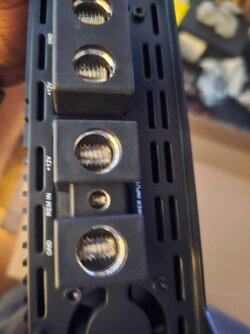
A 12.5k amplifier, even with high-efficiency class-D circuitry, requires a massive amount of current. At 0.5 ohms, the current draw is immense. If the vehicle’s charging system—alternators, battery banks, and grounding—is not up to the task, the voltage will drop (voltage sag). When voltage drops, the amplifier pulls even more current to compensate, creating a vicious cycle of heat that can destroy both the amplifier and the subs.
3. Mechanical Limitations
The Soundqubed HDX4 18 is a beast of a driver, but it has a physical limit to how far the cone can travel (Xmax). By feeding it significantly more power than its RMS rating, the user risks "bottoming out" the subwoofers, where the voice coil former strikes the back plate of the magnet assembly, leading to immediate mechanical failure.
Expert Recommendations for Safety
For those determined to utilize such high-output equipment, the professional consensus is to follow a strict protocol:
- Gain Structure Calibration: Use an oscilloscope or a DD-1 distortion detector to set the gain. Never set the gain by ear. The goal is to reach maximum power output just before the onset of clipping.
- Advanced Thermal Monitoring: Consider adding temperature sensors to the subwoofer magnets. If the coils get too hot, the resistance changes, which further destabilizes the load on the amplifier.
- Rigid Electrical Infrastructure: Ensure the use of 0-gauge (or larger) copper cabling for all power and ground runs. A dedicated lithium-based battery bank is strongly recommended to maintain voltage stability during heavy bass transients.
- Enclosure Design: The box must be tuned correctly to provide "acoustic loading." A well-designed enclosure acts as a brake for the subwoofer, preventing it from over-extending its mechanical limits at the tuning frequency.
The Verdict: Proceed with Extreme Caution
The user’s request to run four Soundqubed HDX4 18s on a Deaf Bonce Atom 12.5k at 0.5 ohms is technically possible, but it is not "plug-and-play." It is a high-performance configuration that requires a deep understanding of electrical flow, heat dissipation, and mechanical limitations.
Industry experts suggest that if the user does not have an oscilloscope, a highly robust electrical system, and the willingness to accept that this setup is on the extreme edge of component failure, they should reconsider. The recommendation is to either run the system at a higher impedance (1 ohm or 2 ohms) to preserve the longevity of the components or to ensure that the gain is dialed back significantly to stay within the subwoofers’ thermal envelope.
Ultimately, the goal of any high-end audio system is not just to produce the loudest sound, but to do so with enough control to prevent the very equipment being used from becoming the casualty of its own power. In the world of 12,000-watt builds, the difference between a world-class sound system and a pile of burnt electronics often comes down to the discipline of the operator.
As the community continues to analyze this configuration, one thing remains clear: when you double the power, you double the responsibility to manage the heat. Any enthusiast looking to replicate such a build must prioritize the integrity of the signal and the stability of the voltage above all else. Whether this specific setup will thrive or fail depends entirely on the precision of the installation and the restraint of the listener.